You are an acoustic consultant and need to make the best arg...
Prompt
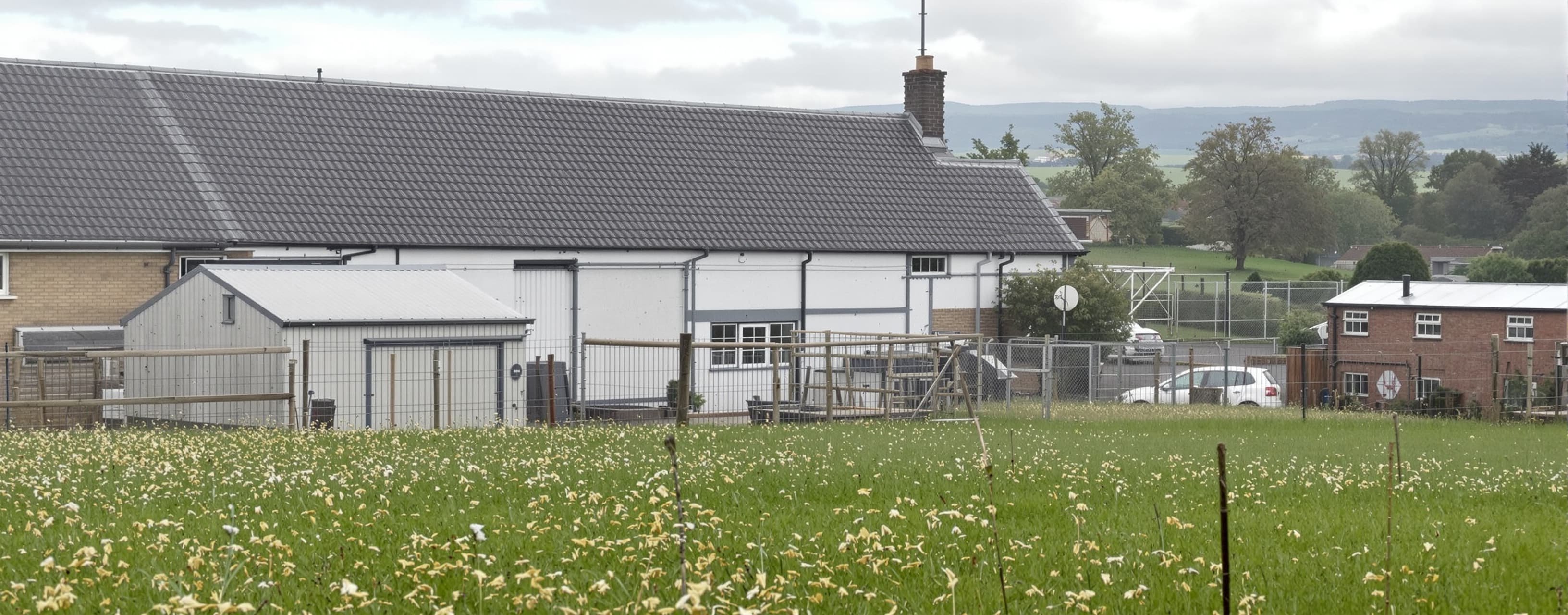
You are an acoustic consultant and need to make the best argument for your client — keeping factual and accurate but highlighting points that support the client's application and arguing against points a planner would use to object. Be technically accurate and complete without over-explaining or giving more detail than necessary, but enough that we are unlikely to be questioned. Give a new discussion that argues why this application is acceptable, keeping my voice and style. Long enough to say what needs to be said firmly without over-committing, and no fluff. Also highlight any issues in the calcs, assumptions or approach. 1. Introduction Your Acoustic Consultancy has been commissioned by the planning agent, on behalf of the applicant, to undertake a noise assessment and prepare a Noise Management Plan in connection with the retrospective change of use of part of the agricultural yard at the site, to a dog kennel facility. An environmental noise survey has been undertaken at the site to characterise the existing background and ambient noise climate during normal operation of the facility. The measured levels, together with operational information provided by the applicant and agent, have informed the assessment of the kennel use against the relevant local planning guidance, and have informed the operational controls set out in the Noise Management Plan. 2. Site Description The site is an existing agricultural holding with agricultural buildings and facilities. The kennel use is located within the farm complex, immediately west of an existing barn, on a historic concrete pad previously used as a stable block and dog grooming facility. The use comprises ten individual dog kennels arranged as a single run, with adjacent farm buildings and the wider farmyard immediately surrounding. The site sits in a rural setting on the edge of a nearby settlement. A local lane runs to the north and provides the principal vehicular access. The wider area is predominantly agricultural grassland with scattered dwellings. The closest dwelling is the farmhouse at the site itself, approximately 50 m northwest of the kennels. This dwelling is occupied by the applicant and functionally associated with the kennel operation and wider farm holding; it is not therefore considered a third-party noise-sensitive receptor, though predicted levels there are reported for completeness. The next-nearest residential property is Receptor 1, east of the kennels at approximately 70 m and well screened by intervening farm buildings. The nearest third-party receptor unrelated to the farm holding is Receptor 2, approximately 170 m northwest, partially screened by intervening vegetation. Beyond these, surrounding land is open agricultural grassland with further dwellings at greater distances. The application is retrospective, seeking consent for change of use of part of the agricultural yard to dog kennels. The facility has operated since early 2023, with ten kennels on the existing concrete pad. Access is by appointment only, with gates set back from the road to allow vehicles to wait off the carriageway. The applicant confirms the facility provides day and overnight boarding year-round. Customer access is 08:00–19:00, with overnight arrivals before 19:00. Feeding is 07:30–08:00 and 17:00–18:00. A final supervised toilet break occurs at approximately 22:00. The boarding kennels are 30 mm composite insulated panels, each with a hatch to an external run and ventilation openings in the end doors. Hatches close overnight; CCTV lets the applicant check the dogs from the farmhouse in the evening. The applicant also keeps fourteen dogs in separate kennels (not part of this application) elsewhere on the property, adjacent to the application site. 3. Design Criterion and Assessment Methodology 3.1 Local Planning Policy The local authority's adopted core strategy is the relevant policy framework. The Design and Access Statement identifies the employment land policy and the rural life support policy as relevant; the latter requires that rural development should not be detrimental to residential amenity. The local authority's Noise and Planning Technical Guidance supplements this and directly addresses noise from commercial dog kennelling/boarding. It recognises dog vocalisation as highly intermittent and characterful, and states BS 4142 is not an appropriate sole method for kennel barking. Instead it emphasises: predicted maximum barking level at the receptor relative to representative background; duration/frequency of events; separation and screening; time of day; and operational controls limiting sustained or repeated barking. This assessment follows that guidance and the Core Strategy amenity test. 3.2 Supplementary Methodology – Reference Kennel Guidance The local guidance is qualitative and gives no numerical method for predicting barking levels. In its absence, the source levels and calculation framework of a widely-cited reference guidance document, "Location of Premises for the Boarding and Breeding of Dogs and other Animals" (1999), have been used as a quantitative supplement, widely used in UK kennel planning assessments. This derives an indicative time-averaged barking level for comparison with measured background; results are deliberately conservative and should be read alongside the qualitative factors in the local guidance and operational controls. The method assesses a medium dog barking for a cumulative 10 minutes per hour, corrected for dog numbers, against the arithmetic average LA90 during the operational period. 3.3 BS8233:2014 / WHO Guidelines for Community Noise (1999) Internal residential guidance: living room/dining room 35–40 dB LAeq (07:00–23:00); bedroom 35 dB LAeq daytime, 30 dB LAeq 8-hour night — consistent with WHO's living room 35 dB / bedroom 30 dB LAeq criteria. WHO also notes indoor levels should not exceed ~45 dB LAmax more than 10–15 times a night (Vallet & Vernet, 1991). 3.5 ProPG Draft Guidance The ANC/IOA/CIEH draft ProPG for dog kennel noise is not adopted but indicates emerging professional consensus supporting the approach here. It endorses the reference source level of ~LAeq 65 dB at 10 m and a ten-minutes-per-hour on-time correction, and for night-time references an internal LAFmax 45 dB criterion in bedrooms to prevent sleep disturbance. It also recognises that receptors with a financial interest in the kennel operation, including family members living adjacent, may be excluded from third-party impact assessment — consistent with the treatment of the applicant's farmhouse here — and identifies operational history, best practicable means, and area character as material considerations. 4. Environmental Noise Survey 4.1 Survey Procedure & Equipment A noise survey was carried out over a one-week period in April 2026 at the location shown on the site plan, chosen to represent the most affected dwellings. Continuous 5-minute LAeq, LAmax, LA10 and LA90 samples were logged, with continuous audio reviewed alongside logged levels to identify and characterise barking events. Weather was generally dry with light winds; background data is not considered compromised. The kennel facility operated normally throughout. Measurements followed ISO 1996-2:2017, using a calibrated Class 1 sound level meter with no significant calibration drift observed. 4.2 Results – Noise Climate Monitoring Period | LAeq,T | Typical¹ LA90,5min | Median LAFmax Daytime 07:00–19:00 | 60 dB | 36 dB | 75 dB Evening 19:00–23:00 | 55 dB | 26 dB | 65 dB Full Night 23:00–07:00 | 55 dB | 21 dB | 49 dB Night 23:00–05:00 | 39 dB | 20 dB | 46 dB Early Morning 05:00–07:00 | 60 dB | 34 dB | 74 dB ¹Typical LA90 = 10th percentile of all LA90 values in the period. The measured climate is characteristic of a quiet rural location. Per the local guidance (background levels should represent the quietest/most sensitive periods, not a simple average), a representative background of LA90 35 dB has been adopted for the primary assessment. The reference guidance instead advocates an arithmetic average, which is less stringent — the arithmetic average across the 08:00–20:00 operating period is LA90 40 dB. 4.3 Results – Barking Events The monitor was adjacent to the applicant's own kennels, approximately 45 m from the boarding kennels; recordings include both groups. Boarding-kennel barking was generally below LAFmax 70 dB, typically closer to 60 dB. Period | Typical LAFmax | Highest LAFmax | Notes Evening 19:00–23:00 | 66 dB | 70 dB | Occasional, mainly 20:00–21:00 Night 23:00–05:00 | 55 dB | 67 dB | Only one night with meaningful barking, brief and modest Night 05:00–07:00 | 63 dB | 68 dB | Primary period of night-time barking Boarding-kennel barking was infrequent 23:00–05:00; events after 05:00 were higher but coincided with higher background levels during the dawn chorus. These measurements describe external sound from the kennels as occupied and operated, including the effect of the enclosed accommodation. 4.4 Adopted Assessment Criteria Period | Basis | Adopted criterion 07:00–08:00 | Local authority external LAFmax (95 dB source, medium dog) | LAFmax ≤16 dB (LA90 21−5 dB) 08:00–20:00 | Local authority external LAFmax | LAFmax ≤35 dB (LA90 35 dB) 20:00–23:00 | Local authority external LAFmax | LAFmax ≤16 dB (LA90 21−5 dB) 23:00–07:00 | Local authority external LAFmax, measured events as context | LAFmax ≤16 dB (LA90 21−5 dB) 08:00–20:00 | Reference guidance LAeq,T (65.6 dB@10m, 60% of 10 dogs, 10 min/h) | vs LA90 35 dB (and 40 dB shown) 23:00–07:00, indoors | ProPG | External LAFmax −15 dB open window; internal LAFmax 45 dB 5. Predicted Sound Levels 5.1 Based on Published Data Using the local guidance's Lw 95 dB LAFmax source (medium dog) as a conservative sensitivity check: Receptor | Distance | Predicted LAFmax Applicant's farmhouse | 50 m | 53 dB Receptor 1 | 70 m | 32 dB Receptor 2 | 170 m | 42 dB Using the reference guidance source level (LAeq,T 65.6 dB@10m/dog; 60% of 10 dogs = six barking dogs, 73 dB@10m): Receptor | Distance | Predicted level Applicant's farmhouse | 50 m | 59 dB LAeq,T Receptor 1 | 70 m | 38 dB LAeq,T Receptor 2 | 170 m | 43 dB LAeq,T 5.2 Measured Data Measured on-site barking levels over several nights are considered more representative than the published source levels of actual operating conditions, kennel construction and propagation. Corrections applied: 18 dB screening at Receptor 1, 5 dB at Receptor 2 (sheds/fences/vegetation/ground); internal predictions allow 15 dB attenuation through a partially open window. 6. Assessment by Period 6.1 Daytime 08:00–20:00 Predicted farmhouse level (~59 dB LAeq,T) is comparable to measured ambient daytime level; reported for completeness only, not a third-party receptor. Third-party predictions: 38 dB (Receptor 1) and 43 dB (Receptor 2) LAeq,T, 3–8 dB above the 35 dB background. Published-data maxima are 52/57 dB LAFmax, also above background. 6.2 Evening 20:00–23:00 Measured barking was occasional, mainly 20:00–21:00. Conservative maxima (52/57 dB LAFmax) exceed the 26 dB evening background; internal levels are 37/42 dB LAFmax. 6.3 Night-time 23:00–07:00 The local guidance places particular weight on maximum barking level at night. The formal night criterion (LA90 21 dB) gives LAFmax ≤16 dB; 05:00–07:00 events are also compared against the higher contemporaneous background of LA90 34 dB. Predicted maxima reach LAFmax 57 dB, above the formal criterion; with 15 dB window attenuation, internal levels reach LAFmax 42 dB — below the 45 dB reference. The internal criterion is considered the more direct indicator of sleep-disturbance potential and is met even in this conservative case. Receptor | Period | External Typical/Highest | Background LA90 | Internal Typical/Highest Receptor 1 | 23:00–05:00 | 33/45 dB | 20 dB | 18/30 dB Receptor 1 | 05:00–07:00 | 41/46 dB | 34 dB | 26/31 dB Receptor 2 | 23:00–05:00 | 38/51 dB | 20 dB | 23/36 dB Receptor 2 | 05:00–07:00 | 46/52 dB | 34 dB | 31/37 dB Highest measured-based internal levels reach 31 dB (Receptor 1) and 37 dB (Receptor 2) LAFmax — below the 45 dB reference. External maxima exceed the formal background-related criterion despite modest absolute levels; the 05:00–07:00 background is materially higher than the core night period, and boarding-kennel barking was generally infrequent before 05:00. 6.5 Assessment Summary Period | Basis | External | Comparison | Internal Daytime 08:00–20:00 | Reference published data | 38/43 dB LAeq,T | 3/8 dB above LA90 35 dB | n/a Evening 20:00–23:00 | Local authority data + measured frequency | 52/57 dB LAFmax | Above LA90 26 dB; occasional | 37/42 dB LAFmax Night 23:00–05:00 | Measured operation | 33–45 / 38–51 dB LAFmax | Above formal criterion; infrequent | 18–30 / 23–36 dB LAFmax, below 45 Early morning 05:00–07:00 | Measured operation | 41–46 / 46–52 dB LAFmax | Above formal criterion; actual LA90 34 dB | 26–31 / 31–37 dB LAFmax, below 45 7. Discussion Assessments using the local authority and reference guidance source levels predict LAeq,T and LAFmax barking levels above representative background at third-party receptors, with night-time maxima also exceeding the formal background-related external criterion. These are conservative; corresponding internal levels are below LAFmax 45 dB and provide a more direct indication of sleep-disturbance potential. Predictions based on barking actually measured during normal operation are materially lower. Barking was generally infrequent 23:00–05:00, with most activity after 05:00 when background was higher. The LAFmax figures describe isolated maximum events, not sustained sound. The Noise Management Plan includes active supervision, prompt intervention where dogs fail to settle, dog suitability assessment, controlled exercise-field use and appointment-only access. The applicant resides immediately adjacent and can respond promptly to repeated barking. The kennels sit within an established farm holding in open countryside, where agricultural activity, vehicles, livestock and other transient sources already contribute to the rural noise climate; barking is distinguishable from these but its measured levels and limited duration indicate it would not normally dominate that climate. Predicted levels apply to the most exposed façade of each dwelling; the primary external amenity areas at Receptor 1 and Receptor 2 lie on the opposite, screened sides and would experience appreciably lower levels. The facility has operated continuously since early 2023 without substantiated noise complaints — practical evidence of its effect under the existing operational regime.
 Z AI
Z AI
 OpenAI
 Google
 SpaceXAI