Could you analyze this based on what I've written? Do you th...
Prompt
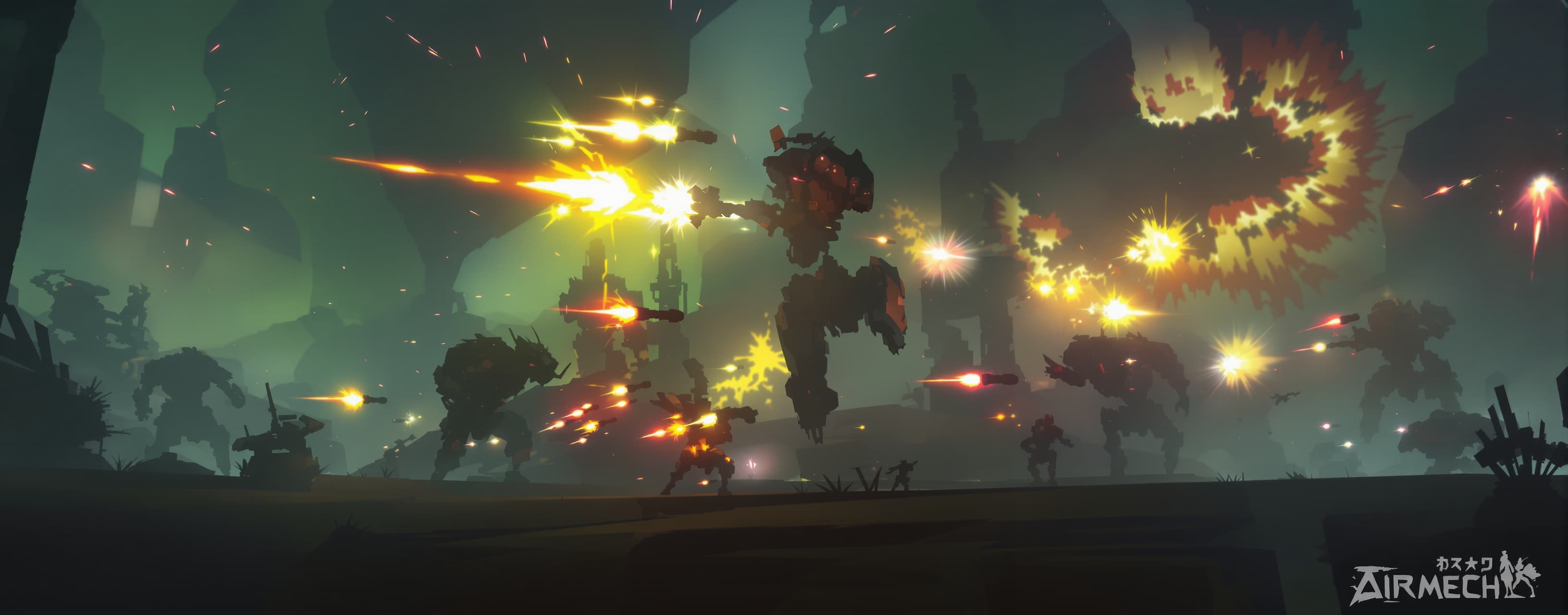
Could you analyze this based on what I've written? Do you think this is a good and accurate analysis, or do you have something else in mind—perhaps a better solution or a stronger idea? Or maybe you disagree with this direction entirely and think the game should still take place in space, feature robots, tanks, or something along those lines. Please analyze it carefully and suggest what you think would be the best and most suitable concept. :"Your concern is understandable; especially because of the camera angle, robot silhouettes, bullet-heavy combat, and bright effects, our game could initially look similar to The Riftbreaker or AirMech. However, in terms of actual gameplay, the game we are imagining is quite different from both of them. The real problem is not mechanical similarity, but the possibility of creating a “I’ve seen this before” impression in store screenshots. ## How Similar Are We Really? | Feature | The Riftbreaker | AirMech | Our Proposed Game | |---|---|---|---| | Core genre | PvE base-building/survival | Action-RTS/MOBA | Persistent open-world PvPvE arena | | Player count | Solo or 4-player co-op | Small team matches | 8–24 players depending on the map | | Rounds/matches | Campaign and survival sessions | Match-based | The server never shuts down | | Main objective | Build a base, develop your economy, survive creature waves | Produce units, capture bases, destroy the enemy fortress | Develop your character, win operations, control regions | | Base building | Central to the game | Fixed bases and unit production | Players do not build bases | | RTS units | Defensive towers and production | Producing and transporting units is a core mechanic | None | | PvP | None | Yes | One of the core systems | | Character progression | Equipment, research, and crafting | Out-of-match unlocks | Physical evolution within the world | | Limb/part destruction | No | No | Core mechanic | | Death | PvE continuation system | Normal match respawn | Escape as your core | | Highest level | Better equipment and base | Match/account progression | Transforming into a Titan and Ascension | The Riftbreaker is officially a solo or four-player co-op base-building, survival, and action-RPG game. The heart of the game revolves around mining, energy, defensive towers, walls, and surviving waves of enemies. AirMech, on the other hand, is an action-RTS. The player directly controls an AirMech while simultaneously producing and transporting units, capturing bases, and trying to destroy the opposing fortress. Therefore: Mechanically, our game is not the same. However, the visual combination of “isometric sci-fi robot + lots of projectiles + metallic environments” could make people associate us with those games. ## Should We Abandon the Robot Idea? No. But I would change the visual direction away from “sci-fi robots fighting on an industrial planet.” If we include the following elements, comparisons to The Riftbreaker become much stronger: - Mining buildings. - Power plants. - Building walls and defensive towers. - Defending against swarms of insect-like creatures. - Green alien planet biomes. - Standard human-piloted mechs. - Blue lasers and military-style UI. - Campaign-based technology research. If we remove these elements, the similarity decreases significantly. The first 15 seconds of our game should show this: A player’s robot arm gets torn off. Another player pulls the severed arm toward themselves. They attach it to their own body. They immediately use the new weapon. When they die, they escape as a small core. Meanwhile, different teams continue fighting in the background. Something like that would not look like The Riftbreaker or AirMech. ## Should We Go Back to Space? Returning to classic black outer space would be the safest option from a production standpoint, but it would not solve the originality problem. Space gives us: - Vehicles that require little or no animation. - Easy modular body construction. - Cheap environment production. - Simple physics and collision systems. - Low asset requirements. But we lose: - We invite comparisons to Starblast and Reassembly. - The screen can feel empty and dark. - The player may feel less physically connected to their character. - Progression becomes less visually impressive. - We risk disappearing among the many existing top-down space games. So while escaping comparisons to The Riftbreaker, we would move closer to Reassembly/Starblast/Cosmoteer territory. We would not be moving into a competition-free space. ## Honest Answer: There Is No Guaranteed 10/10 Idea There is no concept I could confidently call “10/10, definitely original, definitely successful.” Because if a theme becomes too original, it can sometimes struggle to communicate to players what they are actually supposed to do. For example, Sipho has a fairly original system where you combine body parts to create your own underwater organism. Its reviews are positive, but the total review volume is only around 330. That demonstrates that: **Originality ≠ automatic popularity.** The balance we are looking for is: **70% familiar gameplay + 30% powerful hook the player has never seen before.** # My Stronger Proposal: Elemental Constructs Instead of choosing between robots and spaceships, we could take the same modular progression system and move it into artificial fantasy bodies. The player begins as a small magical core and gradually constructs a gigantic combat body by attaching stone, metal, crystal, fire, storm, and living components to themselves. These do not have to be traditional golems. They could be geometric, modular combat entities somewhere between mechanical robots and magical creatures. Possible working titles: - COREBOUND - SHATTERBORN - ARCANE MACHINES - RUNECORE - FRACTURED CORES - PRIMAL FORGE ## Starting Form The player is born as a small floating energy core: - One movement ring. - One basic attack rune. - One defensive layer. - Two empty attachment points. As the player gathers resources and enemy parts in battle, they gradually construct their body. ## Body Materials | Material | Gameplay Effect | |---|---| | Stone | Heavy, resistant, difficult to knock back | | Metal | Strong weapon and armor attachment points | | Crystal | High energy and magical capacity | | Wood/Roots | Regenerates itself over time | | Bone | Absorbs life energy through damage | | Lava | Area damage at close range, but risks overheating | | Storm | Speed, lightning, and chain attacks | | Void | Teleportation, pulling, and invisibility | | Light | Shields, healing, and lasers | | Shadow | Poison, cloning, and stealth | These parts would not simply be differently colored armor. They would fundamentally change the structure and behavior of the character. ## Combination System The real “What happens if I combine these?” feeling comes from combining elements: **Stone + Fire = Lava Armor** **Water + Storm = Chain Lightning** **Crystal + Light = Prism Laser** **Metal + Gravity = Magnetic Cannon** **Root + Fire = A constantly burning and regenerating body** **Bone + Shadow = Parasitic arms that grow stronger through damage** **Wind + Ice = Cutting Ice Storm** **Void + Storm = Teleporting Lightning Attack** One player could have stone legs, a crystal torso, and storm arms. Another could become a floating void entity with no physical legs at all. This system preserves the strongest parts of the robot progression concept: - New arms. - New torsos. - New movement systems. - Larger bodies. - Dismemberment. - Reaching Titan level. But visually, it becomes completely different from The Riftbreaker and AirMech. # What Would the World Look Like? The game should not take place in a traditional fantasy forest either. Otherwise, we simply replace comparisons to The Riftbreaker with comparisons to Diablo. Instead, the world could be a persistent open area called **The Crucible**, formed where shattered elemental planes have collided and fused together. The map could contain regions such as: - Rivers of molten metal. - Storm plateaus. - Crystal deserts. - Living root forests. - Reverse-gravity void zones. - Frozen temples of light. - Bone and fossil fields. At the center of the map lies the **World Core**. Each region provides different materials that support different builds. Players are forced to travel to specific regions depending on the technologies and body parts they want. This system would also distribute players naturally across the world: New players gather basic stone, metal, and root components in the outer regions. Mid-level players fight in elemental territories. Powerful players move toward the center and participate in world events. Titans clash with each other in the central regions. # The Control System Does Not Change Technically, we could use almost the exact same system as the robot game: - Isometric/slightly angled 3D camera. - Gameplay takes place primarily on a single plane. - WASD movement. - Torso and attack direction follows the mouse. - Dash. - Two primary attacks. - One utility system. - Modular attachment points. - Part-based damage. The animation cost does not necessarily have to be higher than with robots either. Elemental bodies could: - Float above the ground. - Be constructed from geometric components. - Use energy connections instead of traditional skeletal rigs for their arms. - Temporarily hover if their legs are destroyed. - Use energy threads connecting different body parts. This means that small animation imperfections could actually look like part of the art style. # Visual Spectacle Potential This concept is even better suited to VFX-heavy production than robots or space: When a stone body breaks, chunks of rock scatter everywhere. When crystal cracks, light shines from inside it. When a lava arm is torn off, it leaves a molten trail across the ground. Storm components connect to each other through arcs of lightning. Void components distort the surrounding environment as they disappear. Ice attacks physically cover enemy armor in frost. Roots wrap themselves around enemy bodies. When a massive Titan dies, the different elements composing its body trigger a chain reaction of explosions. With low-poly geometry combined with strong shaders and VFX, we could achieve a visually impressive result without requiring expensive character assets. # Death and Progression When the player dies, the **Soul Core** at the center of their body is released. Their body shatters. Some of their parts remain scattered across the battlefield. The player takes control of the Soul Core. They can: - Escape back to their base. - Temporarily attach themselves to a teammate’s body. - Recover one important component from their own wreckage. Permanent technology trees and blueprints are not lost. The player only loses part of their current battlefield power. A player who reaches Titan level can still perform **Ascension**: They transform their body into the team’s guardian **Elemental Titan**. They receive permanent research points. They are reborn as a small core. Their former Titan body remains in the world for a while and continues fighting as an AI-controlled entity. # Updated Evaluation of the Concepts | Concept | Immediate Appeal | Originality | Progression | Asset Efficiency | Market Potential | |---|---:|---:|---:|---:|---:| | Industrial Robots | 9 | 6 | 10 | 6 | 8 | | Black-Space Ships | 8 | 5 | 8 | 9 | 7 | | Storm-World Ships | 9 | 8 | 8 | 7 | 8.5 | | Biological Micro-Creatures | 8 | 10 | 10 | 7 | 7 | | **Elemental Constructs** | **9** | **9.5** | **10** | **8** | **9** |"
 OpenAI
 AnthropicOpenAI
 Kimi
Kimi