July 10, 2026
Muse Spark 1.1: Meta gains 8 Intelligence Index points in three months
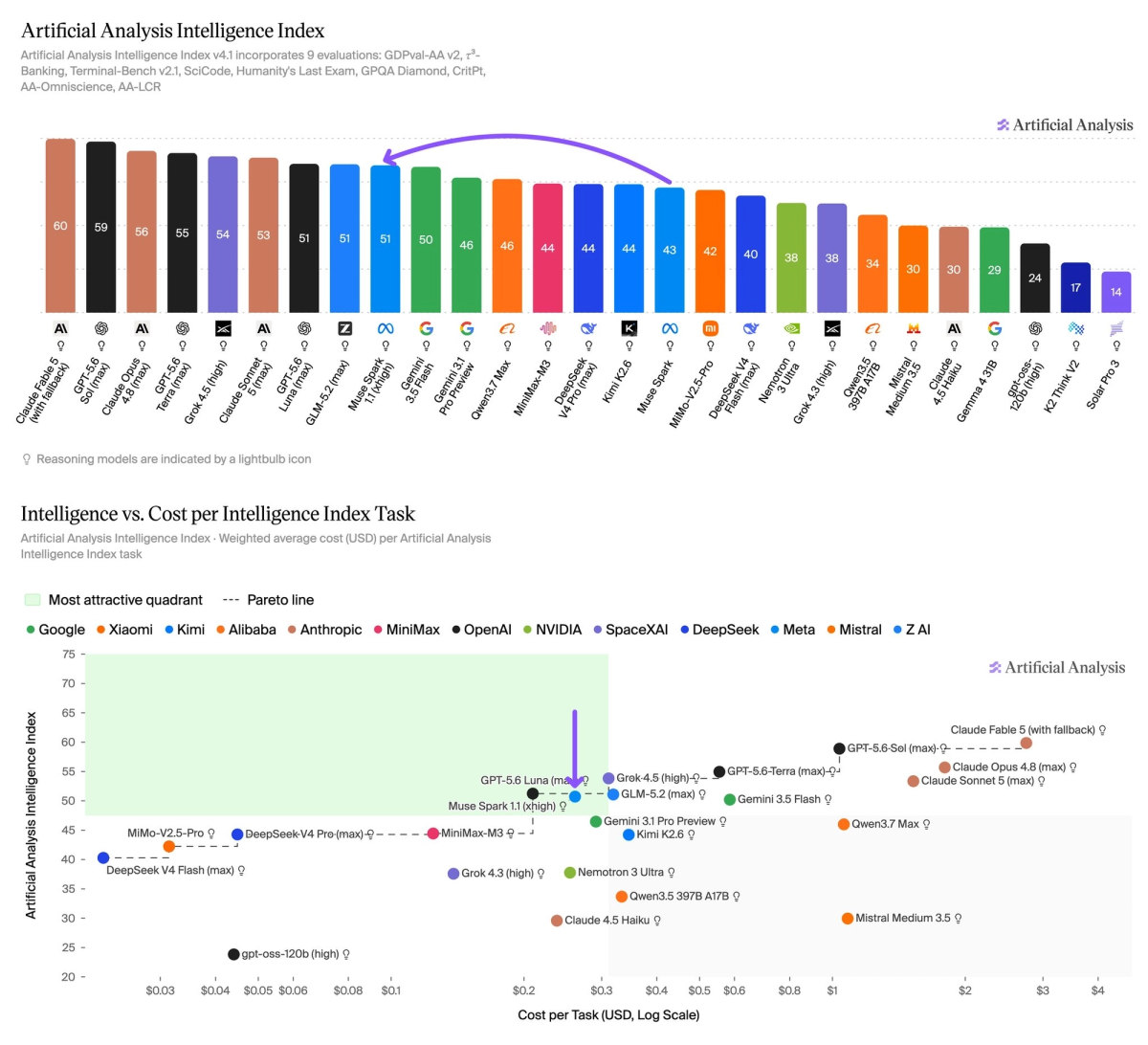
See model pageMeta's Muse Spark 1.1 scores 51 on the Artificial Analysis Intelligence Index and is cost and token efficient compared to its peers
We supported Meta with pre-release evaluation of Muse Spark 1.1 (xhigh), which gains 8 points over Muse Spark 1.0 (43) in three months. It is effectively tied with GLM-5.2 (max), GPT-5.4 (xhigh), and GPT-5.6 Luna (max) at 51, three points behind Grok 4.5 (high, 54), with the leading edge at Claude Fable 5 (60), GPT-5.6 Sol (max, 59), and Claude Opus 4.8 (max, 56).
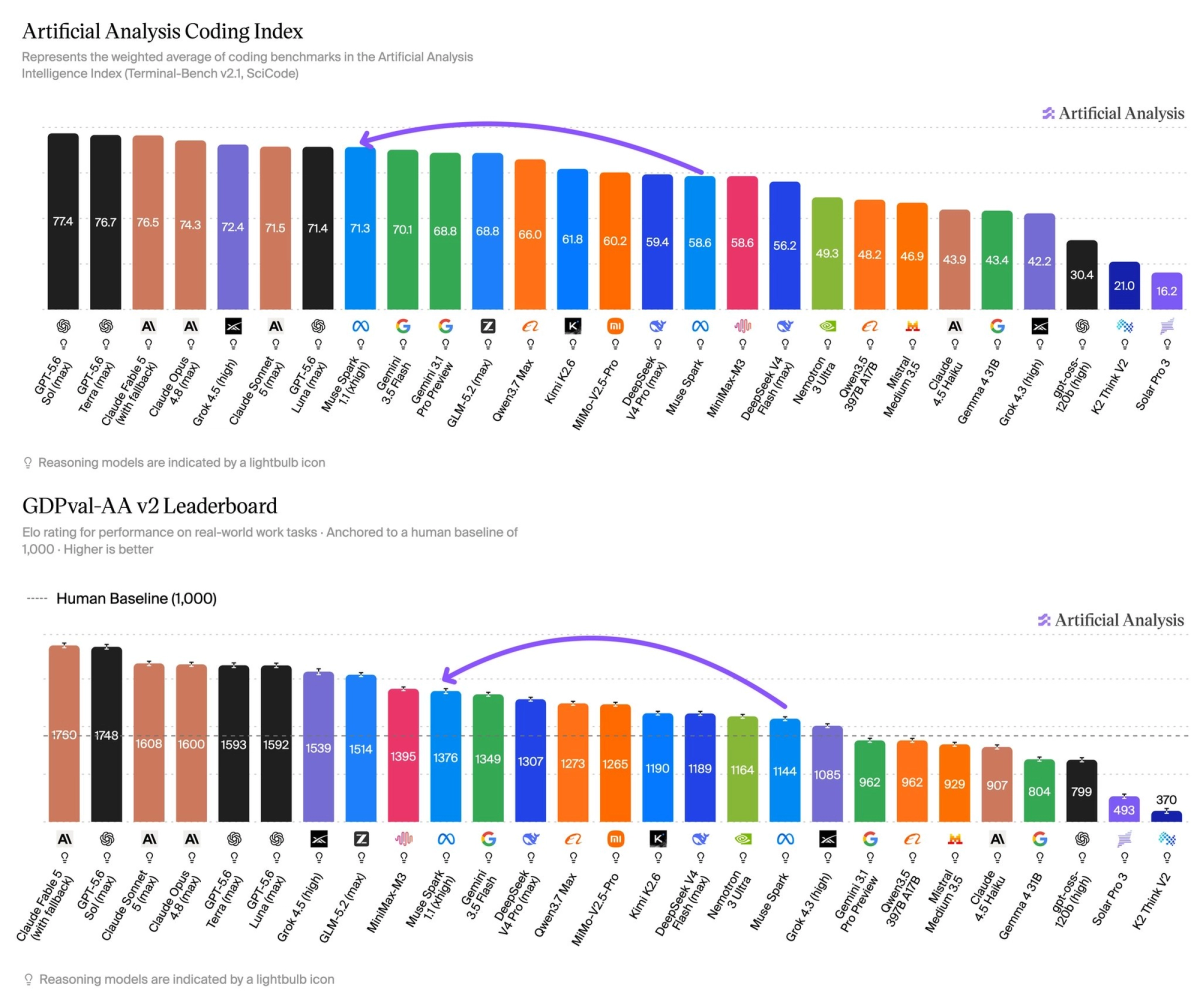
The gains concentrate in Scientific Reasoning, Coding, and Knowledge. Agentic Knowledge work improves substantially but continues to lag the frontier on GDPval-AA v2.
Key Takeaways:
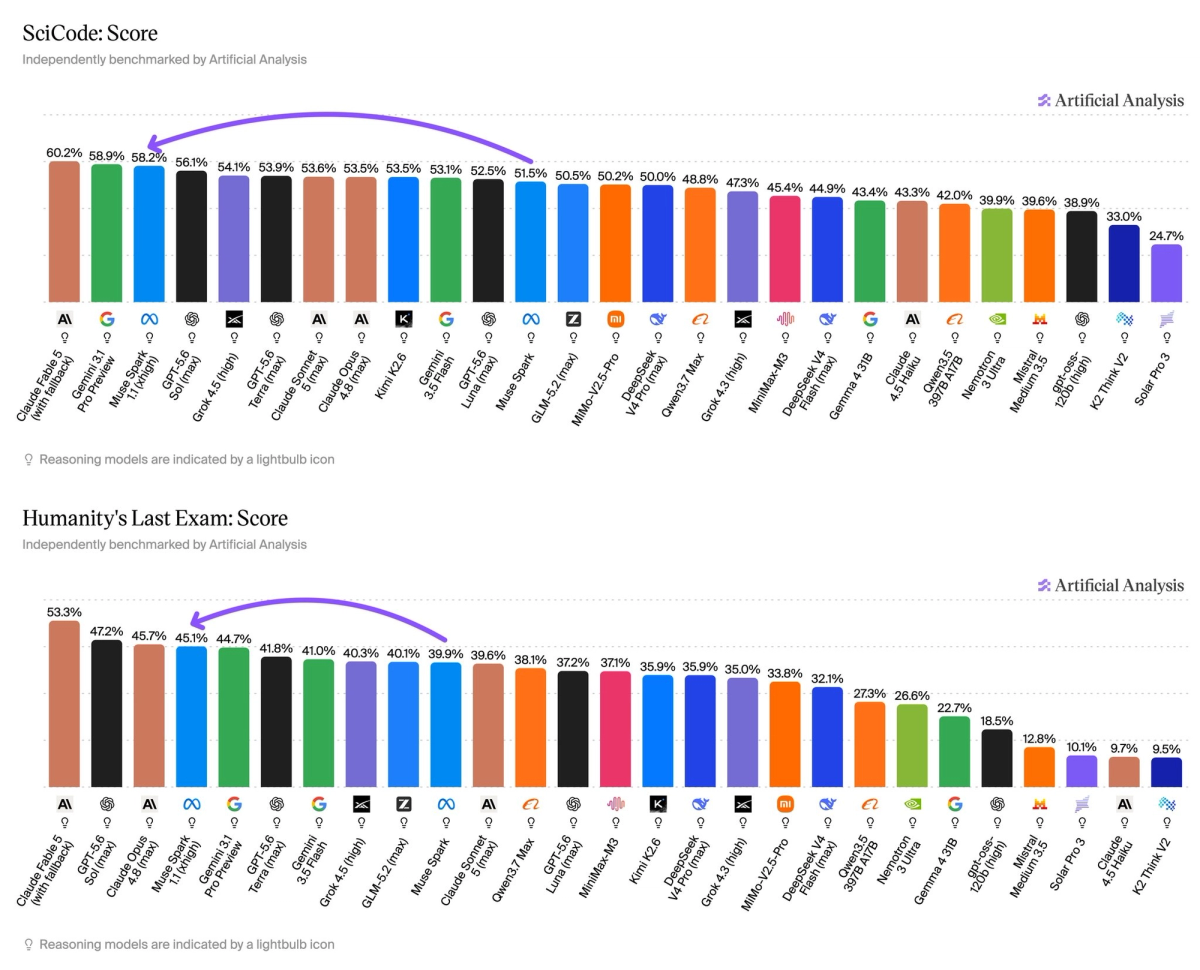
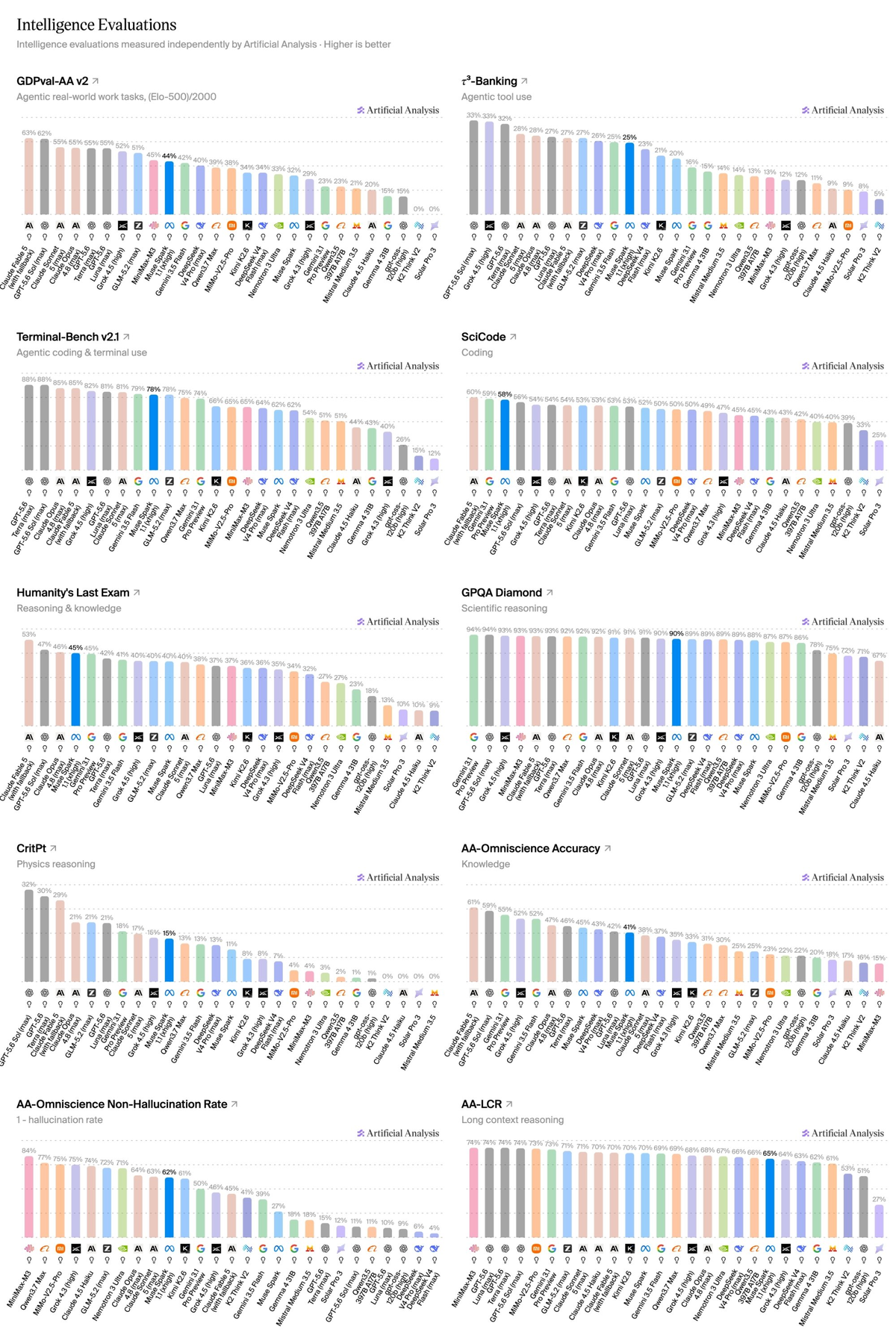
➤ Muse Spark 1.1 gains substantially on the first Muse Spark release. This was driven in particular by gains in agentic knowledge work (GDPval-AA v2) and coding (SciCode, TerminalBench). On Humanity's Last Exam, it reaches 45%, within a point of Claude Opus 4.8 (max, 46%) and ahead of GPT-5.5 (44%) and Grok 4.5 (high, 40%)
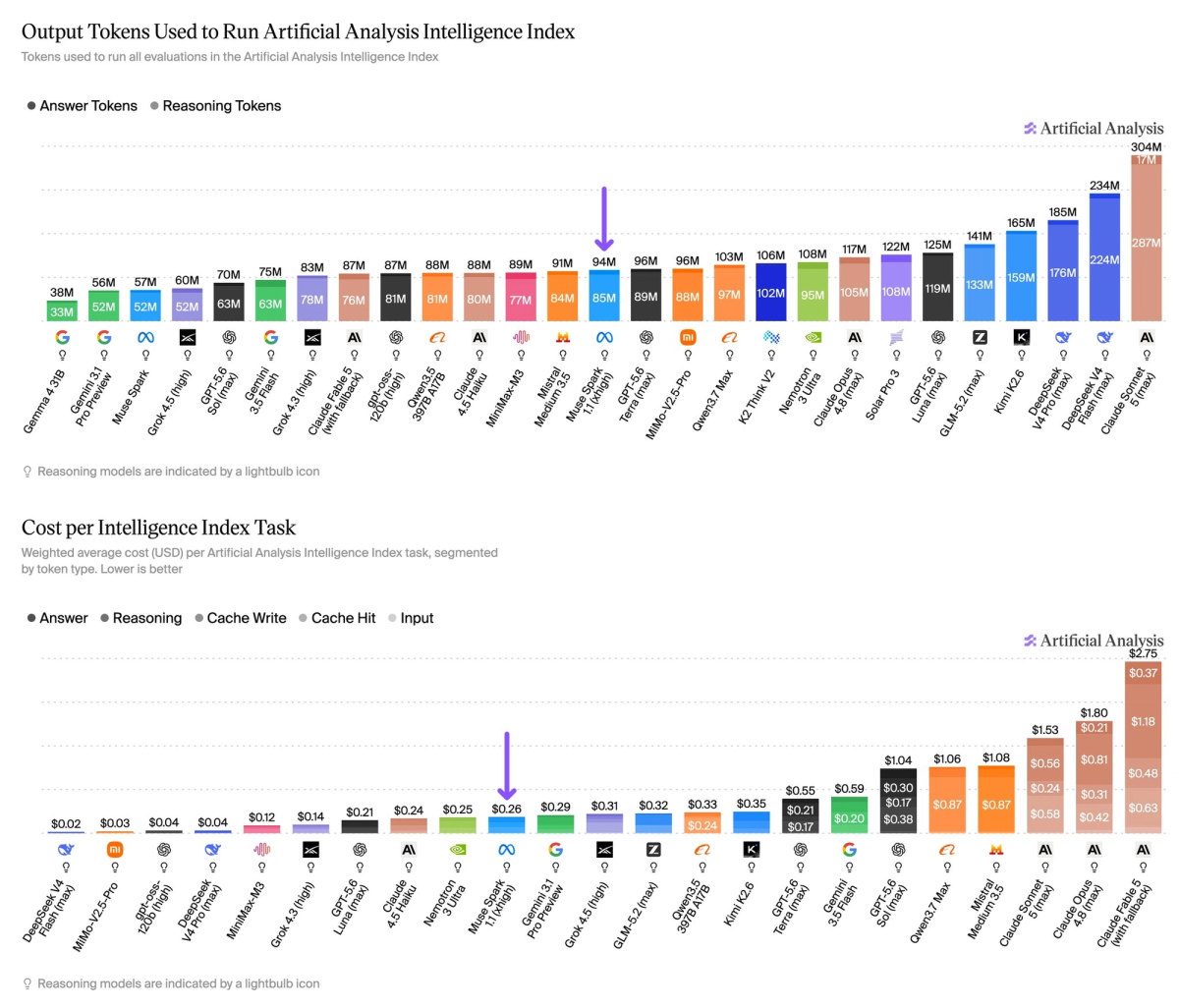
➤ The most token-efficient of the models effectively tied at 51 and among the cheaper models to run. Muse Spark 1.1 used 94M output tokens to run the Intelligence Index, fewer than GPT-5.4 (xhigh, 109M), GPT-5.6 Luna (max, 125M), and GLM-5.2 (max, 141M). We estimate ~$0.26 per Intelligence Index task at Meta's $1.25/$4.25 pricing - below GLM-5.2 ($0.37) and roughly 3x below GPT-5.4 ($0.89)
➤ The AA-Omniscience gain is driven by abstention rather than accuracy. The score more than quadrupled from 4 to 18 as the hallucination rate fell 35 points (73% to 38%), with the attempt rate down from 95% to 82% and accuracy roughly flat (45% to 41%)
Other model details:
➤ Context window: 1M tokens, up from 262k for Muse Spark 1.0
➤ Pricing: $1.25/$4.25 per 1M input/output tokens; cache hits discounted to $0.15 per 1M
➤ Output speed: ~114 tokens/s median on Meta's first-party API, with a ~21s time to first answer token
➤ Availability: Meta's first-party API at launch
The 8 point Intelligence Index gain over Muse Spark 1.0 is concentrated in Scientific Reasoning, Coding, and Knowledge: the Coding Index +12 points (59 to 71), SciCode +6 points (52% to 58%), Humanity's Last Exam +5 points (40% to 45%), AA-Omniscience +14 points (4 to 18), and GDPval-AA v2 +232 Elo (1144 to 1376).
SciCode is the standout: Muse Spark 1.1 ranks #3 across all models we have benchmarked at 58%, behind only Claude Fable 5 (60%) and Gemini 3.1 Pro Preview (59%). Its 45% on Humanity's Last Exam sits within a point of Claude Opus 4.8 (max, 46%), a model five points ahead of it on the Intelligence Index.
Muse Spark 1.1 is relatively token-efficient, using 94M output tokens to run the Intelligence Index. This figure is lower than the other models it roughly ties with on a 51 Intelligence Index, with GPT-5.4 (xhigh) using 109M, GPT-5.6 Luna (max) using 125M, and GLM-5.2 (max) using 141M.
However, it used more tokens than several higher-scoring models, such as Claude Fable 5 and Grok 4.5 (high). When this moderate level of token efficiency is combined with Meta's low per-token costs, we estimate a Cost per Intelligence Index Task figure of ~$0.26, behind only GPT-5.6 Luna ($0.21) among models at or above its intelligence.
Muse Spark 1.1 shows the opposite AA-Omniscience pattern to Grok 4.5. Where Grok 4.5's gain came from higher accuracy alongside a higher hallucination rate, Muse Spark 1.1's rise from 4 to 18 comes from abstention: its hallucination rate fell 35 points to 38% while accuracy held roughly flat.
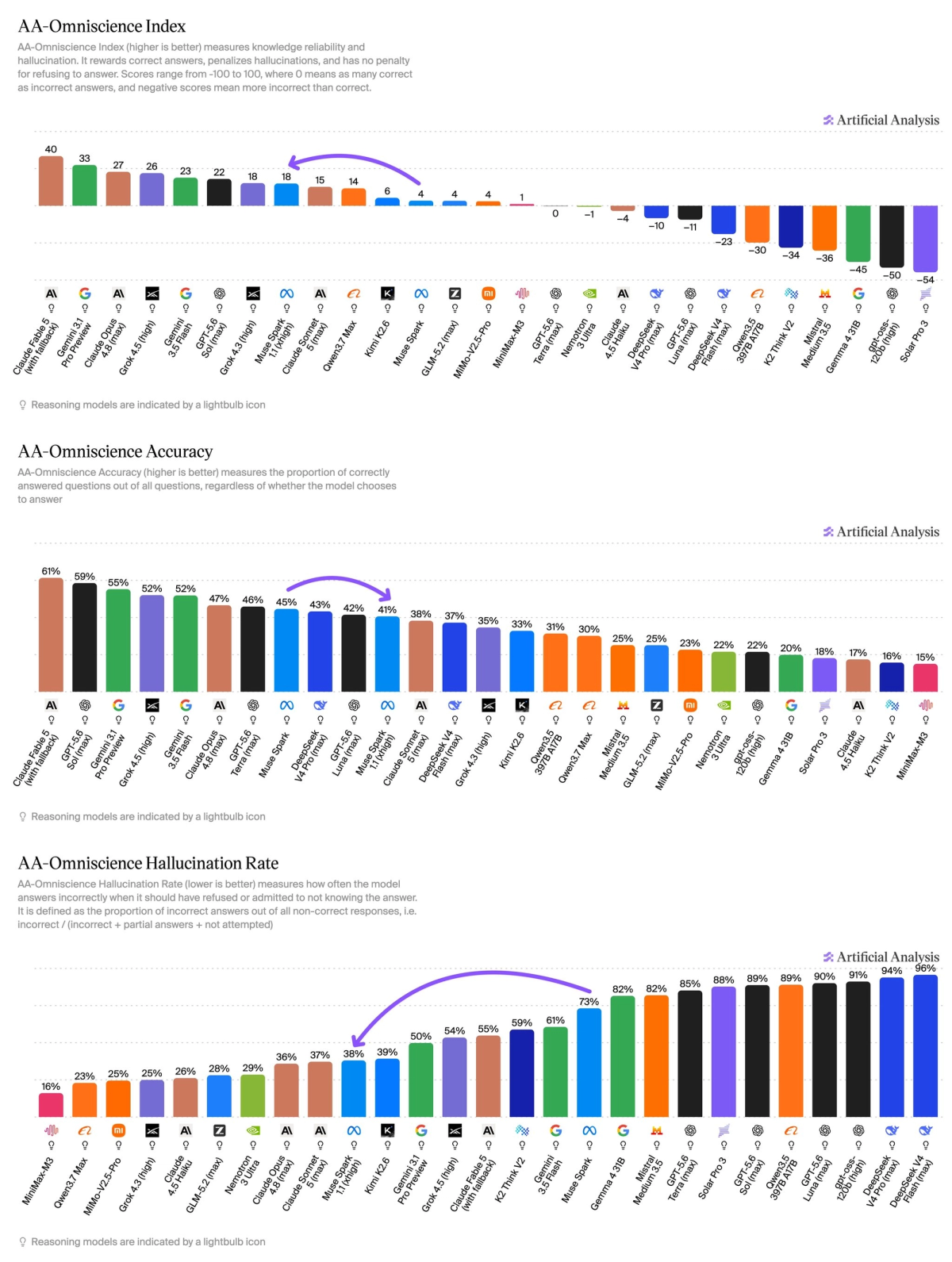
Full Intelligence Index evaluations breakdown:
For more details and full results, see: https://artificialanalysis.ai/models/muse-spark-1-1
Read the latest
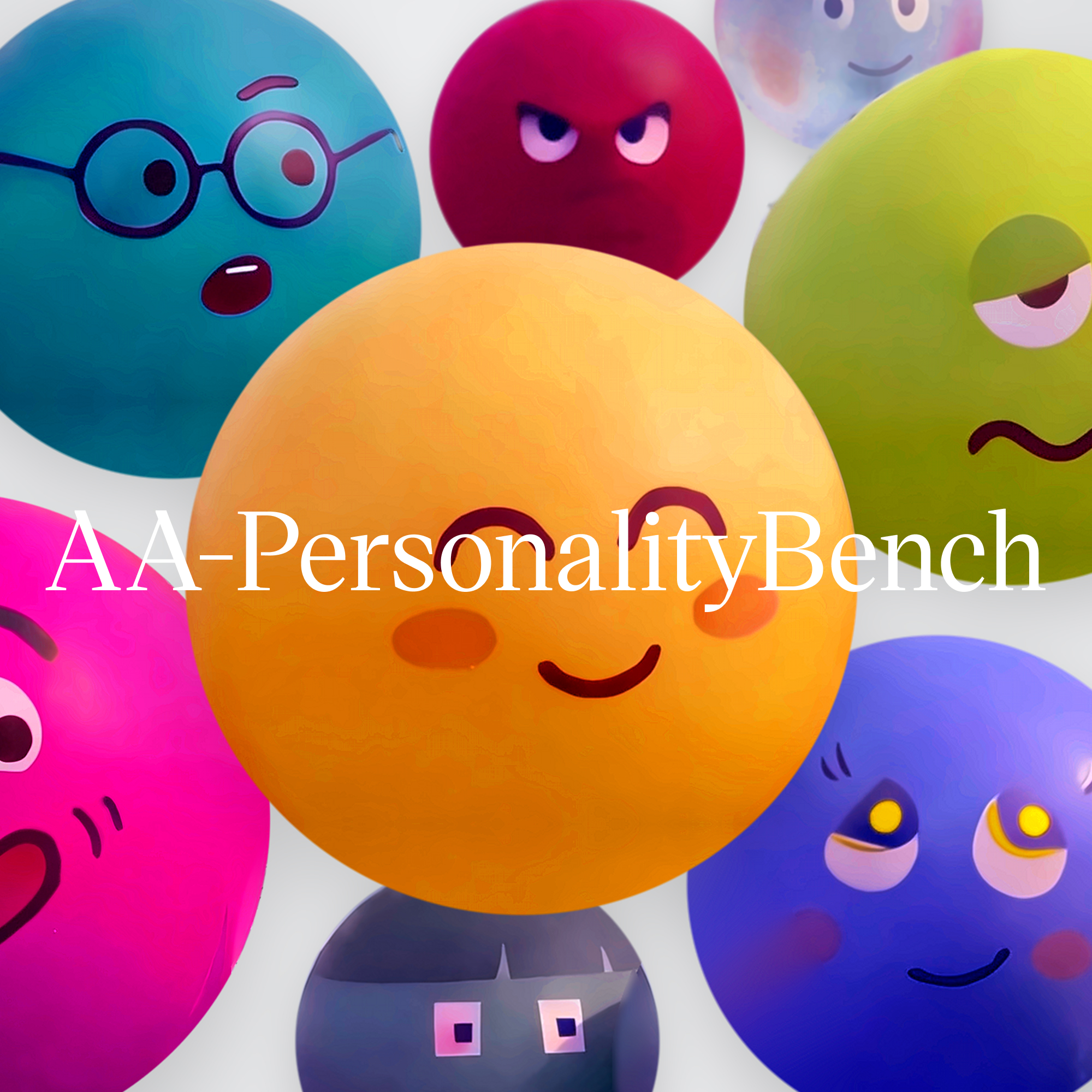
Announcing AA-PersonalityBench: measuring how AI models communicate
AA-PersonalityBench measures the personality and communication style of AI models. A panel of LLM judges compares answers pairwise on 30 personality traits, which roll up into 8 personality indexes, alongside 21 communication characteristics measured directly from every response.
October 19, 2026
Reflection has released Beam, their first model launch
Reflection’s first model, Beam, scores 30 on the Artificial Analysis Intelligence Index, placing it #2 among US open weights models
October 16, 2026
First AA-AgentPerf results for NVIDIA Vera Rubin NVL72
NVIDIA Vera Rubin NVL72 serves up to ~5.7x the total throughput per megawatt of GB300 NVL72 on AA-AgentPerf, with first results on DeepSeek V4 Pro, DeepSeek V4.1 Flash, GLM-5.2 and Kimi K3.
October 15, 2026