AA-3D: Interactive 3D Experience Benchmark

AA-3D
AA-3D排行榜
范围 | 模型 | Elo | |
|---|---|---|---|
| 1 | 1-3 |  Claude Sonnet 5.5 (Max, Default Fallback) | 1194±3495% 区间 1160 至 1228 |
| 2 | 1-3 | Claude Opus 5.5 (Max, Default Fallback) | 1190±3595% 区间 1155 至 1225 |
| 3 | 1-4 |  GPT-6 Astra (Max) | 1165±3495% 区间 1131 至 1199 |
| 4 | 4-6 | Claude Fable 5.1 (Max, Default Fallback) | 1131±3495% 区间 1098 至 1165 |
| 5 | 4-6 | GPT-6 Sol (Max) | 1123±3495% 区间 1089 至 1156 |
| 6 | 4-6 | GPT-6.1 Sol (Max) | 1114±3395% 区间 1081 至 1148 |
| 7 | 7 |  Muse Spark 1.3 (Max) | 1035±3295% 区间 1003 至 1067 |
| 8 | 8 | GPT-6 Luna (Max) | 1000锚点固定为 1000,作为本榜单 Elo 刻度的参照点。 |
| 9 | 8-13 | Claude Haiku 5.5 (Max) | 994±3295% 区间 962 至 1026 |
| 10 | 8-13 |  Grok 4.7 (Xhigh) | 994±3295% 区间 962 至 1026 |
| 11 | 8-13 |  Kimi K3 (Max) | 982±3395% 区间 949 至 1015 |
| 12 | 8-14 |  MiMo-V2.6-Pro | 977±3295% 区间 945 至 1009 |
| 13 | 9-14 |  Gemini 3.8 Flash (High) | 965±3295% 区间 932 至 997 |
| 14 | 12-15 |  Qwen3.8 Max (0902) | 948±3295% 区间 916 至 981 |
| 15 | 14-15 |  GLM-5.3-Flash | 931±3295% 区间 899 至 963 |
| 16 | 16-17 |  Mistral Large 4 Preview | 868±3295% 区间 835 至 900 |
| 17 | 16-17 |  Step 5 Preview | 848±3395% 区间 814 至 881 |
| 18 | 18 | GLM-5.3 (Max) | 782±3595% 区间 747 至 816 |
| 19 | 19 |  MiniMax-M3 | 739±3495% 区间 704 至 773 |
| 20 | 20-21 |  Inkling (Xhigh) | 579±4195% 区间 538 至 620 |
| 21 | 20-21 |  Nemotron 3 Ultra 550B A55B (Reasoning) | 569±4595% 区间 524 至 614 |
AA-3D Elo
AA-3D Elo
AA-3D:Elo vs. 每项任务成本
示例任务
选择一个领域、一项任务和一个模型,即可加载该模型构建的场景。
任务
模型
Create an interactive adult man performing weightlifting exercises, with views that expose his muscles, skeleton and organs in anatomically accurate form.
21 个模型中有 21 个在盲测投票中有此任务的场景。
Elo vs. Intelligence Index
AA-3D Elo vs. Intelligence Index
各领域胜率
每个单元格显示模型在某个任务领域中赢得的投票占比,数据来自当前排行榜所依据的投票。按对手均衡的视图对模型在该领域中对每个对手的胜率取平均值,使每个对手的权重相同。
AA-3D 各领域胜率
成本
AA-3D:每项任务成本
Token 使用量
AA-3D:每项任务的输出 Token
每个场景轮次
AA-3D 每个场景轮次
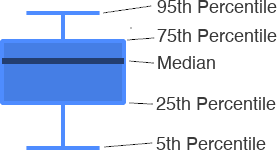
工具使用
AA-3D 每个场景工具调用次数
AA-3D 的运作方式
每个模型都在离线沙箱中作为智能体工作。它会收到一份针对一个交互式场景的书面任务说明,以及所有任务共用的交付规范。模型编写代码、渲染场景、查看自己的截图并加以修改。可用的工具包括 Blender、Rapier 物理引擎、Python、无头浏览器和 CC0 资源库。每次运行在 3 小时或 250 轮后停止。最终结果是一个在浏览器中运行该场景的 index.html 页面。
深入了解一次智能体运行
这些回放使用 AA-3D 发布时的数据。选择一项任务,即可在共享时钟上回放每个模型的运行。将鼠标悬停在某一行上可查看每个操作,点击该行可查看时间分配。
观看场景的构建过程
得分 vs. 发布日期
AA-3D:得分 vs. 发布日期
常见问题
AA-3D v1.0 衡量 AI 模型构建交互式 3D 体验的能力。每个模型会收到一份书面任务说明,并在离线沙箱中使用 three.js 构建单个网页。该基准测试包含 7 个领域的 55 项任务。 阅读 AA-3D 方法论
模型使用基于我们招募的人工评审面板盲测比较的 Elo 评分系统进行排名。面板参与者会与为同一任务构建的两个场景进行交互,在不知道哪个模型构建了哪个场景的情况下选择更偏好的一个。更高的 Elo 分数表示该模型更常被偏好。 参与 AA-3D 投票
探索评测
 Artificial Analysis Intelligence Index v4.3.2
A composite benchmark aggregating ten challenging evaluations to provide a holistic measure of AI capabilities across mathematics, science, coding, and reasoning.
Artificial Analysis Openness IndexA composite measure providing an industry standard to communicate model openness for users and developers.
AA-Briefcase v1.1: Agentic Knowledge Work BenchmarkA private evaluation developed by Artificial Analysis for frontier agentic capability in long-horizon knowledge work, testing agents on realistic business workflows that require deliverables such as spreadsheets, presentations, and memos.
GDPval-AA v2.1 LeaderboardGDPval-AA v2.1 is Artificial Analysis' evaluation framework for OpenAI's GDPval dataset. It tests AI models on real-world tasks across 44 occupations and 9 major industries. Models are given shell access and web browsing capabilities in an agentic loop via Stirrup to solve tasks, with Elo ratings derived from blind pairwise comparisons.
AA-3D: Interactive 3D Experience BenchmarkA benchmark developed by Artificial Analysis for how well AI models build interactive 3D experiences. Models work as agents in an offline sandbox via Stirrup to turn a written brief into a three.js scene, with Elo ratings derived from blind pairwise votes.
 APEX-Agents-AA Benchmark Leaderboard
Artificial Analysis' implementation of the APEX-Agents benchmark, testing AI agents on long-horizon, cross-application tasks in professional-services environments with realistic application tooling.
AA-AnalystAgent Benchmark LeaderboardArtificial Analysis' data analysis benchmark, testing AI agents on their ability to work with spreadsheets and documents to answer quantitative questions a Business Analyst or Data Analyst would face day-to-day.
 AutomationBench-AA: Agentic SaaS Workflow Benchmark
A benchmark measuring agentic task completion across simulated SaaS application environments, scoring the share of each task's objectives completed without guardrail violations.
 Harvey LAB-AA v1.1 Benchmark Leaderboard
Artificial Analysis' implementation of Harvey's Legal Agent Benchmark (LAB), testing AI agents on real-world legal work from Harvey's dataset of 120 private tasks spanning 24 legal practice areas. v1.1, built in collaboration with Harvey, checks every deliverable against the task's source documents for hallucinations, so work that passes every rubric criterion but contains a material hallucination receives no credit. A panel of three judges grades each deliverable criterion-by-criterion.
 GDP.pdf Benchmark Leaderboard
Artificial Analysis' implementation of Surge AI's GDP.pdf benchmark, testing whether language models can reason over long, real-world professional documents and satisfy detailed task-specific criteria.
 EnterpriseOps-Gym-AA Benchmark Leaderboard
Artificial Analysis' independent implementation of ServiceNow's EnterpriseOps-Gym, an agentic benchmark testing whether LLM agents can complete stateful, multi-step enterprise workflows across eight business domains via live tool use, graded on the final state of the underlying databases.
 Terminal-Bench 4.0 Benchmark Leaderboard
A harder 66-task benchmark of complex terminal work across software, machine learning, science, operations, security, hardware, and media, with recalibrated compute and time allowances and improved instructions, environments, and verifiers.
 Terminal-Bench-Science 0.1 Benchmark Leaderboard
A 70-task benchmark of research workflows authored and reviewed by domain experts across the life, physical, earth, mathematical, and engineering sciences, each completed in a terminal and checked by its own set of tests.
 FrontierCode 1.1 Benchmark Leaderboard
Artificial Analysis' implementation of Cognition's FrontierCode 1.1, a private agentic coding benchmark that tests models on completing coding tasks in a way that would actually get merged by maintainers of real-world repositories.
Artificial Analysis Long Context Reasoning Benchmark LeaderboardA challenging benchmark measuring language models' ability to extract, reason about, and synthesize information from long-form documents ranging from 10k to 100k tokens (measured using the cl100k_base tokenizer).
AA-Omniscience: Knowledge and Hallucination BenchmarkA benchmark measuring factual recall and hallucination across various economically relevant domains.
 SciCode Benchmark Leaderboard
A scientist-curated coding benchmark featuring 288 test set subproblems from 80 laboratory problems across 16 scientific disciplines.
 Humanity's Last Exam Benchmark Leaderboard
A frontier-level benchmark with 2,500 expert-vetted questions across mathematics, sciences, and humanities, designed to be the final closed-ended academic evaluation.
 CritPt Benchmark Leaderboard
A benchmark designed to test LLMs on research-level physics reasoning tasks, featuring 71 composite research challenges.
The most challenging 198 questions from GPQA, where PhD experts achieve 65% accuracy but skilled non-experts only reach 34% despite web access.
 ITBench-AA Benchmark Leaderboard
Artificial Analysis' implementation of IBM's ITBench benchmark, testing AI agents on Kubernetes incident root-cause analysis from offline incident snapshots. The agent inspects alerts, events, traces, and topology and identifies the contributing-factor entities (deployments, pods, namespaces, network policies, etc.) responsible for the failure.
 MMMU-Pro Benchmark Leaderboard
An enhanced MMMU benchmark that eliminates shortcuts and guessing strategies to more rigorously test multimodal models across 30 academic disciplines.
 IFBench Benchmark Leaderboard
A benchmark evaluating precise instruction-following generalization on 58 diverse, verifiable out-of-domain constraints that test models' ability to follow specific output requirements.
 Medical Long Context Reasoning (MLCR-AA)
An open benchmark from Wisedocs measuring how well models reason over long, fragmented medical records, performing the multi-document synthesis claims professionals rely on when reviewing insurance and healthcare cases.
 𝜏³-Banking Benchmark Leaderboard
A fintech customer-support benchmark from the 𝜏-Knowledge framework that tests whether agents can navigate a large unstructured knowledge base and execute multi-step tool calls to resolve realistic banking workflows.
Terminal-Bench 2.1 Benchmark LeaderboardA verified refresh of Terminal-Bench 2.0 — 89 curated tasks across software engineering, system administration, data processing, model training, and security, with environment and instruction fixes so scores reflect agent capability rather than environment gaps.
Terminal-Bench Hard Benchmark LeaderboardAn agentic benchmark evaluating AI capabilities in terminal environments through software engineering, system administration, and data processing tasks.
𝜏²-Bench Telecom Benchmark LeaderboardA dual-control conversational AI benchmark simulating technical support scenarios where both agent and user must coordinate actions to resolve telecom service issues.
 MMLU-Pro Benchmark Leaderboard
An enhanced version of MMLU with 12,000 graduate-level questions across 14 subject areas, featuring ten answer options and deeper reasoning requirements.
 LiveCodeBench Benchmark Leaderboard
A contamination-free coding benchmark that continuously harvests fresh competitive programming problems from LeetCode, AtCoder, and CodeForces, evaluating code generation, self-repair, and execution.
MATH-500 Benchmark LeaderboardA 500-problem subset from the MATH dataset, featuring competition-level mathematics across six domains including algebra, geometry, and number theory.
 AIME 2025 Benchmark Leaderboard
All 30 problems from the 2025 American Invitational Mathematics Examination, testing olympiad-level mathematical reasoning with integer answers from 000-999.
 Global-MMLU-Lite Benchmark Leaderboard
A lightweight, multilingual version of MMLU, designed to evaluate knowledge and reasoning skills across a diverse range of languages and cultural contexts.