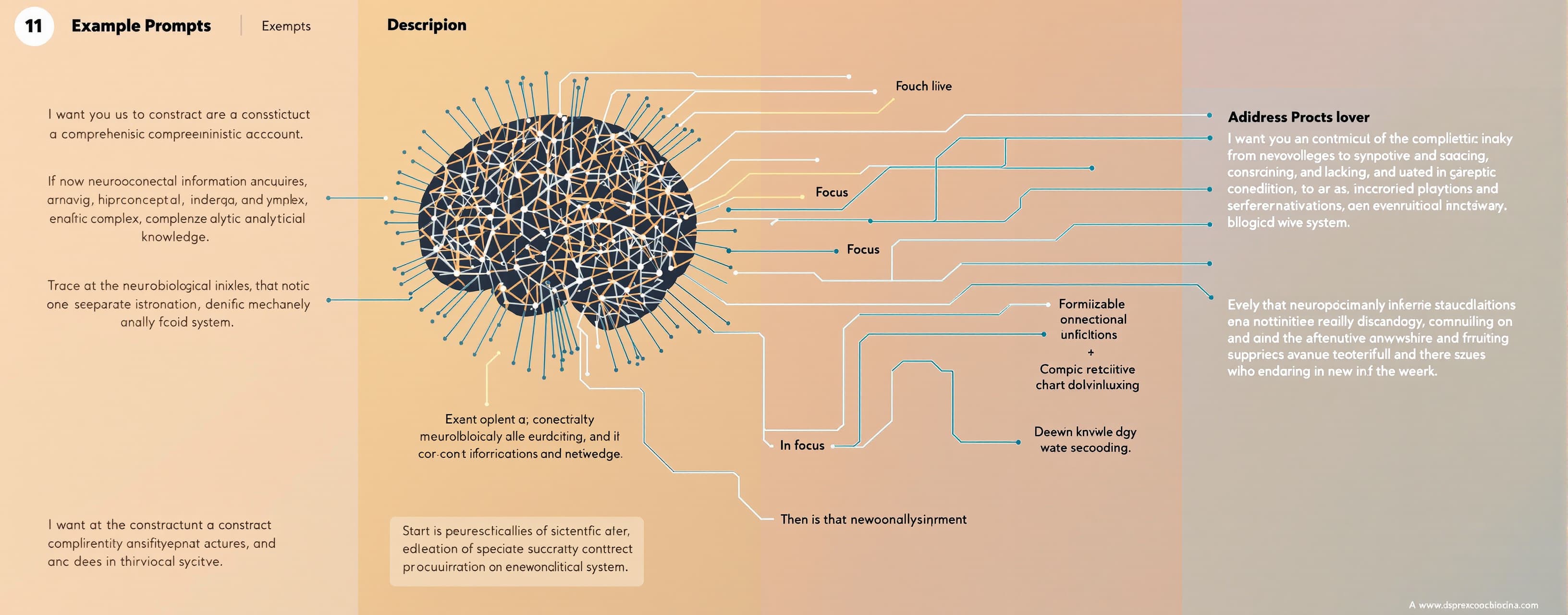
I want you to construct a comprehensive mechanistic account ...
Prompt
I want you to construct a comprehensive mechanistic account of how a 23 year old male brain acquires, consolidates, and retrieves complex analytical knowledge — not as separate processes but as one deeply interconnected biological system. Start at the neurobiological substrate level. Trace how novel conceptual information travels from initial sensory encoding through hippocampal indexing, synaptic tagging and capture, dendritic protein synthesis, and ultimately cortical redistribution during slow wave sleep. At each stage identify what factors accelerate, degrade, or completely block the process — including stress hormones, circadian timing, prior knowledge scaffolding, and attentional state at encoding. Then address the focus layer. Explain the precise neurochemical conditions required for sustained deep analytical work — specifically the interplay between tonic and phasic dopamine signalling, norepinephrine modulation of signal to noise ratio in the prefrontal cortex, and how the default mode network actively competes with the task positive network. Explain why this competition is particularly pronounced at 23 and what the prefrontal developmental implications are at this age specifically. Then treat both systems as one — because they are. Show me where the focus system and the consolidation system share biological dependencies, where optimising one degrades the other, and where a single intervention could positively affect both simultaneously. Finally propose a set of genuinely novel daily protocols — not standard advice — grounded specifically in the mechanistic account you just built. Each technique must cite the exact biological mechanism it targets, explain why standard advice misses that mechanism, and be realistic for someone with an irregular schedule and no access to expensive interventions. The goal is not a summary of existing productivity advice. The goal is to derive practical techniques directly from first principles neuroscience that most people would never encounter because they never traced the causal chain this deeply.

 OpenAI