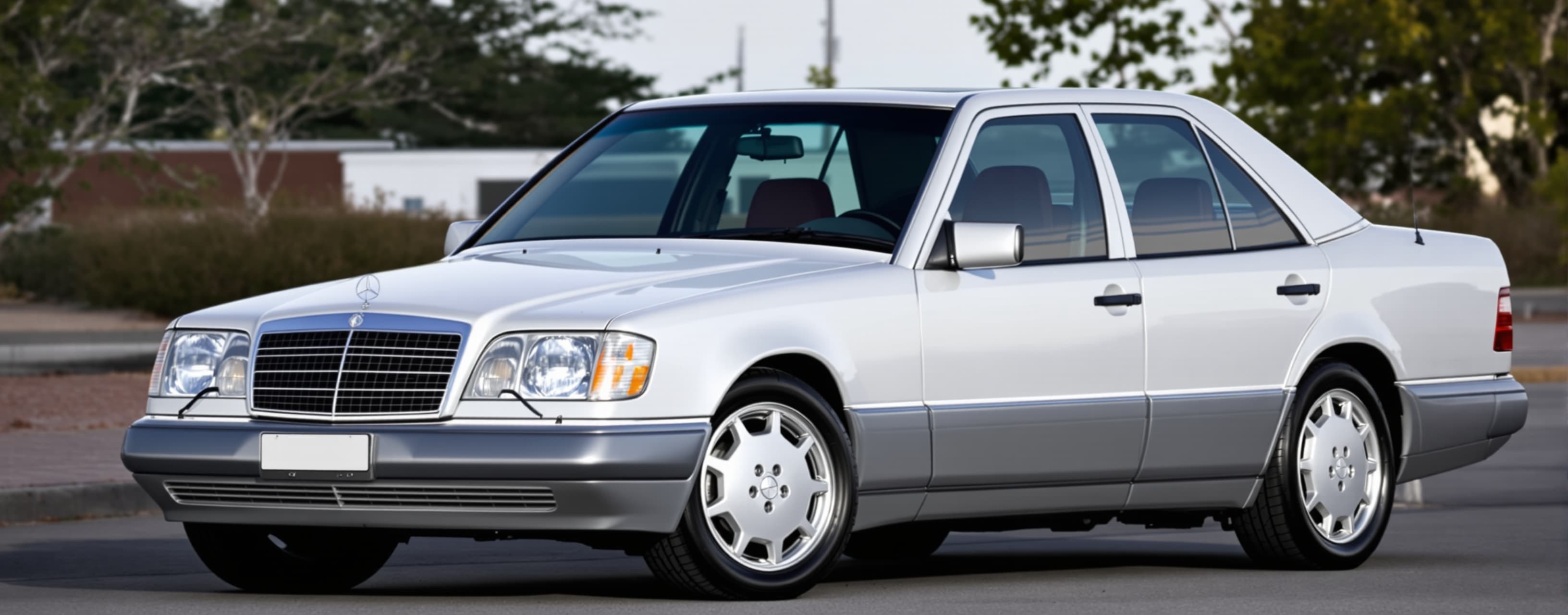
Conduct a **current, evidence-backed, vehicle-specific compa...
Prompt
Conduct a **current, evidence-backed, vehicle-specific comparison** of these two Mercedes-Benz diagnostic scan tools: 1. **YOUCANIC UCAN-II-D Pro** 2. **iCarsoft MB V3.0** Evaluate them **exclusively for the exact vehicle below**. Do not score them based on capabilities that apply only to later Mercedes-Benz models, other W210 variants, or newer OBD-II/CAN vehicles. ## Controlling Vehicle Identity * **Model:** 1996 Mercedes-Benz E320 * **Chassis:** W210 * **VIN:** WDBJF55F5TJ019959 * **Order number:** 0670568399 * **Engine:** M104.995 * **Full engine number:** 104.995.020.40749 * **Transmission:** 722.329 * **Full transmission number:** 722.329.04277410 * **Exterior color code:** 702 * **Production context:** Early-production, pre-facelift W210 with the M104 inline-six and early Mercedes diagnostic architecture Treat the VIN, engine number, transmission number, model year, and chassis as authoritative. Distinguish this vehicle from: * later W210 model years; * facelift W210 vehicles; * M112 V6-powered E320 models; * vehicles using later CAN-based diagnostic systems; * vehicles with different transmissions; * generic “Mercedes-Benz compatible” applications. ## Research Standard Use current information from: 1. official YOUCANIC and iCarsoft documentation; 2. official compatibility lists, manuals, firmware notes, and support responses; 3. Mercedes-Benz diagnostic documentation relevant to this exact chassis and production period; 4. credible owner reports involving early W210, M104, or comparable pre-CAN Mercedes vehicles; 5. specialist Mercedes forums and independent testing where official documentation is incomplete. Do not repeat broad manufacturer claims without verifying that the function works on this exact vehicle architecture. For every important capability, classify the evidence as: * **Confirmed for this exact vehicle** * **Confirmed for the same W210/M104 diagnostic architecture** * **Likely but not independently verified** * **Unsupported** * **Unknown because available evidence is insufficient** Clearly separate: * tool-wide advertised capabilities; * Mercedes-wide capabilities; * capabilities actually usable on this specific 1996 W210 E320. ## Required Analysis ### 1. Physical Connection and Protocol Compatibility Determine for each tool: * whether it can communicate through the vehicle’s Mercedes diagnostic connector arrangement; * whether a Mercedes 38-pin adapter is required; * whether the required adapter is included, optional, or unavailable; * whether a generic passive 38-pin adapter is sufficient; * whether individual pins or control modules require special multiplexing; * whether the scanner supplies or receives the necessary power through the selected connector; * whether the tool can access only emissions-related engine data through the 16-pin OBD-II port or can access Mercedes-specific systems through the 38-pin connector; * which Mercedes diagnostic protocols used by this vehicle are actually supported; * any hardware, cable, adapter, firmware, regional-version, or software-version limitations. Do not assume that having a 38-pin adapter means the scanner can communicate with every module connected to the 38-pin socket. ### 2. Exact Control-Module Coverage Build a module-by-module compatibility matrix for this specific vehicle. Include every system reasonably expected on this VIN or early W210 configuration, such as: * engine management; * transmission control; * ABS; * ASR or traction-control system; * SRS/airbag; * climate-control system; * instrument cluster; * electronic accelerator or cruise-control systems; * immobilizer or drive-authorization systems; * central locking; * alarm system; * convenience or body modules; * seat or door modules, where fitted; * any other diagnostic-capable module relevant to this production year. For every module, show whether each scanner can perform: * module identification; * read fault codes; * display Mercedes-specific fault descriptions; * erase fault codes; * display live data; * graph or record live data; * perform actuator tests; * access adaptations; * reset learned values; * perform coding or configuration; * display freeze-frame or environmental data; * communicate reliably through the correct diagnostic pin. Do not include a module merely because it existed somewhere in the W210 range. Identify whether it is expected, optional, absent, or not verifiable for this exact vehicle. ### 3. Engine-Specific Capability Evaluate each scanner specifically for the **M104.995** engine-management system, including: * generic OBD-II powertrain codes; * Mercedes manufacturer-specific engine codes; * actual values/live data; * oxygen-sensor data; * fuel-trim data; * ignition or misfire information; * throttle and accelerator data; * coolant and intake-air temperatures; * air-mass or load data; * camshaft-related faults; * adaptation values; * actuator tests; * reset or relearn functions; * access to non-emissions faults that generic OBD-II scanners may miss. Identify exactly what additional engine information each tool provides beyond a basic generic OBD-II scanner. ### 4. Transmission-Specific Capability Evaluate compatibility with the exact **722.329** transmission and its control architecture. Determine whether each scanner can: * communicate with the relevant transmission system; * read and erase transmission-specific codes; * display live transmission data; * display selector, speed-sensor, temperature, or shift-related data; * perform adaptations or reset learned values; * perform actuator or solenoid tests; * access transmission functions through the required 38-pin diagnostic path. Do not substitute capabilities documented only for later 722.6 electronically controlled transmissions. ### 5. Climate-Control Diagnostics Because this vehicle has onboard climate-control diagnostics, compare what each scanner adds beyond the HVAC control panel’s built-in diagnostic mode. Assess whether each tool can: * read stored climate-control faults; * erase faults; * display sensor values; * display flap or actuator positions; * command actuators; * identify intermittent faults; * access data unavailable from the dashboard climate-control interface. ### 6. Service and Special Functions Evaluate only functions that genuinely apply to this vehicle, including: * oil/service reset; * SRS reset; * ABS fault clearing; * throttle adaptation; * battery-related reset or registration; * steering-angle calibration; * electronic parking-brake service; * diesel functions; * DPF functions; * injector coding; * transmission adaptations; * immobilizer functions; * module coding. Mark newer-model-only functions as **irrelevant to this vehicle** rather than awarding either scanner credit for them. ### 7. Diagnostic Depth and Usability Compare: * accuracy and specificity of fault-code descriptions; * visibility of raw Mercedes fault codes; * live-data refresh rate; * number of simultaneous data parameters; * graphing; * recording and exporting reports; * automatic VIN recognition; * manual vehicle selection; * module auto-scan; * ability to retry or manually select modules when auto-scan fails; * firmware-update policy; * update cost; * update frequency; * interface speed; * screen readability; * build quality; * cable quality; * battery requirements; * startup time; * technical-support quality; * manual quality; * likelihood of continued support for older Mercedes vehicles. ### 8. Real-World Limitations Identify likely failure modes on this exact car, including: * modules that may not appear during automatic scanning; * false “not supported” messages; * incomplete communication through passive 38-pin adapters; * inability to multiplex the necessary diagnostic pins; * limited access through the 16-pin OBD-II connector; * generic descriptions replacing Mercedes-specific code definitions; * functions shown in menus that do not execute on an early W210; * firmware differences between advertised and current functionality; * confusion between compatibility with “1996 and newer Mercedes” and actual full-system compatibility with an early 1996 W210. ## Required Comparison Table Create a detailed side-by-side table with at least these columns: | Category or Function | YOUCANIC UCAN-II-D Pro | iCarsoft MB V3.0 | Evidence Level | Relevance to This Exact Vehicle | Winner | | -------------------- | ---------------------- | ---------------- | -------------- | ------------------------------- | ------ | The table must include: * connection hardware; * 38-pin compatibility; * engine diagnostics; * transmission diagnostics; * ABS/ASR; * SRS; * HVAC; * instrument cluster; * body systems; * full-system scan; * live data; * actuator tests; * adaptations; * coding; * report export; * updates; * support; * included accessories; * current price; * warranty; * return policy; * major limitations. ## Scoring Score each scanner from **0 to 100 specifically for this vehicle** using this weighting: * **Confirmed control-module coverage:** 30 points * **Diagnostic depth on supported modules:** 20 points * **38-pin and protocol compatibility:** 20 points * **Live data, actuator tests, and adaptations:** 10 points * **Usability and reporting:** 7 points * **Documentation and technical support:** 5 points * **Updates and long-term ownership cost:** 4 points * **Price-to-capability value for this vehicle:** 4 points Do not award points for functions that do not apply to a 1996 W210 E320. Provide: * raw category scores; * weighted total; * confidence level for each total; * explanation of any score based on incomplete evidence. ## Purchasing Verification For each scanner, identify: * exact current model name; * current hardware or software revision, if available; * standard included accessories; * whether the required Mercedes 38-pin adapter is included; * exact adapter or bundle required for this vehicle; * current manufacturer price; * reputable authorized sellers; * Amazon listing and ASIN, when verifiable; * warranty; * return policy; * risk of obsolete, counterfeit, or incorrectly bundled inventory. Do not provide an ASIN unless the listing is verified as the correct current product or bundle. ## Final Recommendation Conclude with: 1. **Best overall scanner for this exact 1996 W210 E320** 2. **Best diagnostic coverage** 3. **Best value** 4. **Best choice if full 38-pin module access is the priority** 5. **Functions one scanner can perform that the other cannot** 6. **Functions neither scanner can reliably perform** 7. **Whether either scanner genuinely provides near-factory-level diagnostics** 8. **Whether a different scanner or Mercedes-specific diagnostic platform is materially better for this exact vehicle** If recommending an alternative, compare it briefly against both tools and explain the additional functions it provides on this exact car. Do not let the alternative replace the requested two-tool comparison. End with a direct purchase recommendation in this format: > **Buy:** [exact scanner and required adapter/bundle] > **Why:** [vehicle-specific reason] > **Do not buy if:** [material limitation] > **Confidence:** [High / Medium / Low] Cite every material compatibility, price, included-accessory, and feature claim. State the research date. Where reliable evidence does not exist, write **“Not verified for VIN WDBJF55F5TJ019959”** rather than inferring support from generic Mercedes marketing.
 DeepSeek
 OpenAI