First AA-AgentPerf-Local results for an NVIDIA RTX Spark N1X laptop
NVIDIA’s RTX Spark N1X puts up to 128 GB of unified memory and a Blackwell GPU in a Windows laptop. In our first AA-AgentPerf-Local results, an RTX Spark laptop completes our local agent workload on Qwen3.8 27B in 18.7 minutes.
AA-AgentPerf-Local replays recorded agent sessions on local hardware
AA-AgentPerf-Local is our open-source tool for measuring how fast a laptop or workstation serves an AI agent. It replays recorded agent sessions against a model server running on the machine, with each request carrying the whole conversation so far, and measures how long the hardware takes to answer every turn.
The model generates exactly the number of tokens recorded for each turn, so every system does the same work. Most of each prompt is a repeat of the previous prompt’s contents. A server that keeps its cache only has to read the opening prompt of each task and what each turn adds (a median of about 450 tokens, and up to 6.4K after a large tool output).
8
Recorded agent tasks, five from PinchBench and three from SWE-bench
168
Model turns, each carrying the full conversation so far
56K
Tokens of context at the longest point in a task
2.6M
Prompt tokens sent to the model across the workload
196K
New prompt tokens (the rest repeat an earlier prompt)
31K
Output tokens, the same count on every system
AA-AgentPerf-Local default workload
Our leaderboard covers three models at 4-bit precision, from a 27B dense model to a 124B mixture-of-experts model, on the five systems below. The RTX Spark laptop joins NVIDIA DGX Spark, the AMD Ryzen AI Halo, a MacBook Pro (M5 Pro) and a desktop with a GeForce RTX 5090.
Systems
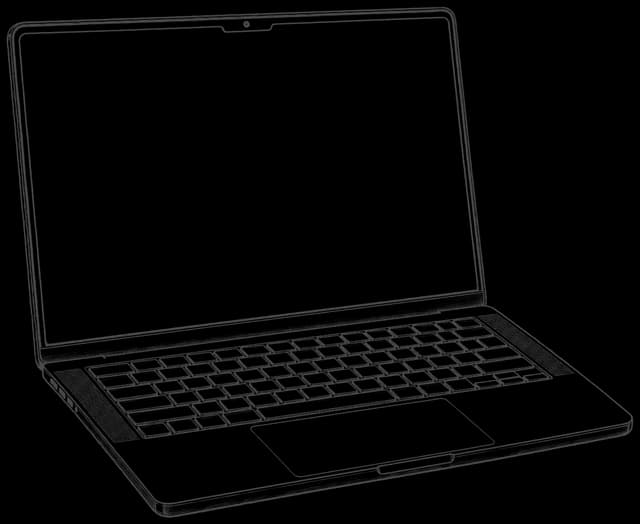

MacBook Pro
M5 Pro · 64 GB · 20-core GPU
- Launch MSRP (64 GB)
- $3,000
- Memory
- 64 GB unified
- Memory bandwidth
- 307 GB/s
- Memory type
- LPDDR5X-9600
- Chip
- M5 Pro
- Launched
- Mar 2026
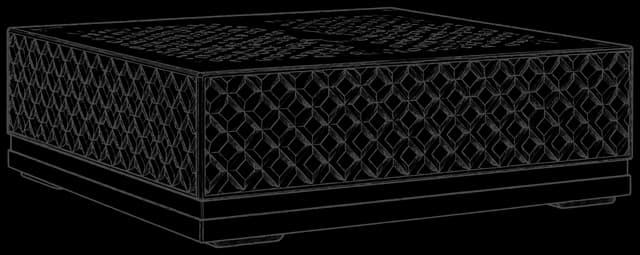

AMD Ryzen AI Halo
- Launch MSRP
- $4,000
- Memory
- 128 GB unified
- Memory bandwidth
- 256 GB/s
- Memory type
- LPDDR5X-8000
- Chip
- Ryzen AI Max+ 395
- Launched
- Jul 2026
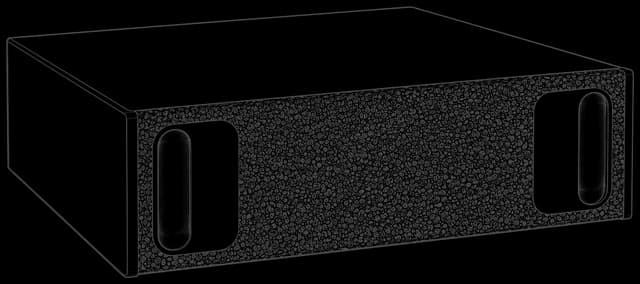

NVIDIA DGX Spark
- Launch MSRP
- $4,000
- Memory
- 128 GB unified
- Memory bandwidth
- 273 GB/s
- Memory type
- LPDDR5X-8533
- Chip
- GB10
- Launched
- Oct 2025
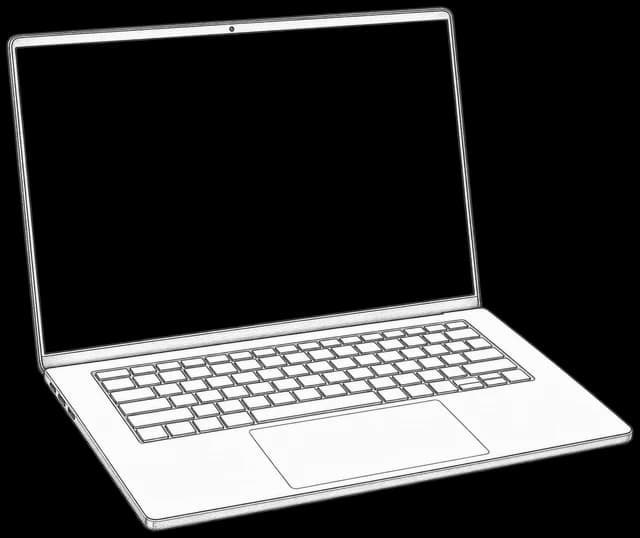
NVIDIA RTX Spark N1X
20-core CPU · 6144-core GPU
- Launch MSRP (128 GB)
- $5,900
- Memory
- 128 GB unified
- Memory bandwidth
- 300 GB/s
- Memory type
- LPDDR5X-9400
- Chip
- N1X
- Launched
- Oct 2026
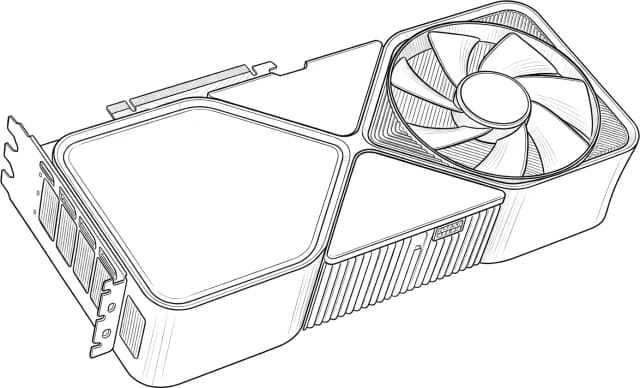
NVIDIA GeForce RTX 5090
- Launch MSRP (card)
- $2,000
- Memory
- 32 GB VRAM
- Memory bandwidth
- 1,792 GB/s
- Memory type
- GDDR7
- Chip
- RTX 5090
- Launched
- Jan 2025
Models

Qwen3.8 27B (Xhigh)
- Intelligence Index
- 34
- Total parameters
- 27B
- Active parameters
- 27B
- Context window
- 256K
- Released
- Aug 2026
- Builds tested
- Q4_K_M, UD-Q4_K_M
Qwen3.6 35B A3B (Reasoning)
- Intelligence Index
- 18
- Total parameters
- 36B
- Active parameters
- 3B
- Context window
- 256K
- Released
- Apr 2026
- Builds tested
- UD-Q4_K_M, NVFP4

Ling 3.0 Flash
- Intelligence Index
- 20
- Total parameters
- 124B
- Active parameters
- 5.1B
- Context window
- 256K
- Released
- Aug 2026
- Builds tested
- Q4_K_M
RTX Spark puts DGX Spark's chip in a Windows laptop
RTX Spark is NVIDIA’s platform for Windows on Arm PCs, which NVIDIA pitches as built to run AI agents locally. Its N1X chip is essentially the GB10 from DGX Spark (NVIDIA’s own recipe catalogue lists RTX Spark as GB10), with a 20-core Arm CPU, a 6,144-core Blackwell GPU and up to 128 GB of LPDDR5X memory shared between them. In the laptop the memory runs faster, giving 10% more bandwidth than DGX Spark (300 GB/s against 273 GB/s). However, the chip runs at 45 to 80 W (NVIDIA’s stated range for N1X laptops), where GB10 is rated at 140 W.
We tested a prototype 15-inch Surface Laptop Ultra with 128 GB of memory, priced at $5,899.99. It runs Windows 11 on Arm and serves every model with a native Windows build of llama.cpp on the GPU. We ran it plugged in with Windows set to its high performance power mode.
| RTX Spark N1X | GB10 (DGX Spark) | M5 Pro (MacBook Pro 14-inch) | |
|---|---|---|---|
| CPU | 20 cores (10 Cortex-X925, 10 Cortex-A725) | 20 cores (10 Cortex-X925, 10 Cortex-A725) | 18 cores |
| GPU | Blackwell, 6,144 CUDA cores | Blackwell, 6,144 CUDA cores | 20 cores |
| Unified memory | 128 GB LPDDR5X-9400 | 128 GB LPDDR5X-8533 | 64 GB LPDDR5X-9600 |
| Memory bandwidth | 300 GB/s | 273 GB/s | 307 GB/s |
| Chip power | 45 to 80 W | 140 W | Not published |
| Operating system | Windows 11 on Arm | DGX OS (Ubuntu) | macOS |
Specifications from NVIDIA’s RTX Spark page and porting guide, NVIDIA’s DGX Spark documentation and Apple as of October 2026, with memory speeds as reported by the systems we tested
Each system runs its own recipe
We run each model with a recipe chosen for each system, using the vendor’s published recipe where one exists, so the runtime, speculative decoding and 4-bit weight format differ between systems. The RTX Spark laptop runs NVIDIA’s llama.cpp recipes for RTX Spark, ported into AA-AgentPerf-Local with NVIDIA’s settings.
| Qwen3.8 27B | Runtime | Weights | Speculative decoding |
|---|---|---|---|
| RTX Spark laptop | llama.cpp, Windows | UD-Q4_K_M | DFlash, 7 draft tokens |
| DGX Spark | llama.cpp, Linux | UD-Q4_K_M | DFlash, 7 draft tokens |
| MacBook Pro (M5 Pro) | llama.cpp, macOS | Q4_K_M | MTP, 4 draft tokens |
| AMD Ryzen AI Halo | llama.cpp, Linux | Q4_K_M | MTP, 2 draft tokens |
| GeForce RTX 5090 desktop | llama.cpp, Linux | Q4_K_M | MTP, 2 draft tokens |
The recipe behind each system’s fastest Qwen3.8 27B result
We are also testing more weight formats and runtimes, including smaller 4-bit formats such as IQ4_XS and Inco AI’s Splash, a Metal engine for Apple Silicon that uses DFlash speculative decoding. We will add their results once they pass our accuracy checks, which we will publish soon. Early tests show faster completion times on some systems.
The RTX Spark laptop finishes the workload in 8-19 minutes, depending on the model
- On Qwen3.8 27B the RTX Spark laptop completes the workload in 18.7 minutes, close to DGX Spark (17.3), 2.0x faster than the MacBook Pro (37.6) and 1.8x faster than the Ryzen AI Halo (34.5). The GeForce RTX 5090 desktop is fastest, at 4.9 minutes.
- On Qwen3.6 35B A3B, which activates 3B parameters per token, it takes 7.6 minutes, close to DGX Spark (7.3), 1.5x faster than the Ryzen AI Halo (11.7) and 1.6x faster than the MacBook Pro (11.9).
- On Ling 3.0 Flash, the largest model on our leaderboard, it takes 15.3 minutes, close to DGX Spark (14.9) and 1.6x faster than the Ryzen AI Halo (25.1). Its 77 GB of weights do not fit on the MacBook Pro or the RTX 5090.
Completion Time by Model and System
MacBook Pro (M5 Pro, 64 GB)64 GB unifiedAMD Ryzen AI Halo128 GB unifiedNVIDIA DGX Spark128 GB unifiedNVIDIA RTX Spark Laptop128 GB unifiedNVIDIA GeForce RTX 509032 GB VRAMQwen3.6 35B A3B, which activates 3B parameters per token, is the fastest model on every system, and the RTX Spark laptop finishes it in 7.6 minutes against 15.3 for Ling 3.0 Flash and 18.7 for the dense Qwen3.8 27B. The GeForce RTX 5090 desktop is the fastest system on every model that fits in its 32 GB.
Completion TimeQwen3.8 27B (Xhigh)
Prices for these systems are approximate and shift from week to week. At current prices, the $5,899.99 RTX Spark laptop costs more than the MacBook Pro (~$3,700) and the Ryzen AI Halo ($4,000) but slightly less than DGX Spark (~$6,000), and the RTX 5090 desktop is the most expensive system at ~$9,500 (a ~$7,000 card plus a conservative $2,500 for the rest of the PC). The chart below uses these prices, and our leaderboard lets you enter your own.
Completion Time vs. PriceQwen3.8 27B (Xhigh)
Explore further
- Compare every system and model on the laptops & workstations leaderboard
- See the full launch command behind each result on the configurations page
- Run any recipe on your own machine with AA-AgentPerf-Local on GitHub
Read the latest
NVIDIA Releases Nemotron 3.5 Super VL and Nemotron 3.5 Bolt 74B A9B
Nvidia’s Nemotron 3.5 Super VL is now the leading US open weight model, scoring 26 on the Artificial Analysis Intelligence Index
October 15, 2026

Welcome to the era of embodied AI: Introducing AA-Robotics v0.1
We are launching AA-Robotics v0.1, our research preview that measures frontier language model performance on understanding, planning, and acting in the physical world. In v0.1, each model is given control of a 6-axis robot arm (5 joints and a gripper) and a simple objective. We’re releasing results for our first eight tasks today.
October 14, 2026

Artificial Analysis Decision Index v1.0
The Artificial Analysis Decision Index benchmarks decision models, a new category of models that answer structured decisions in a single call with a probability for each option. Version 1.0 combines four evaluations across classification, tool calling, knowledge, hallucination, and reasoning.
October 13, 2026