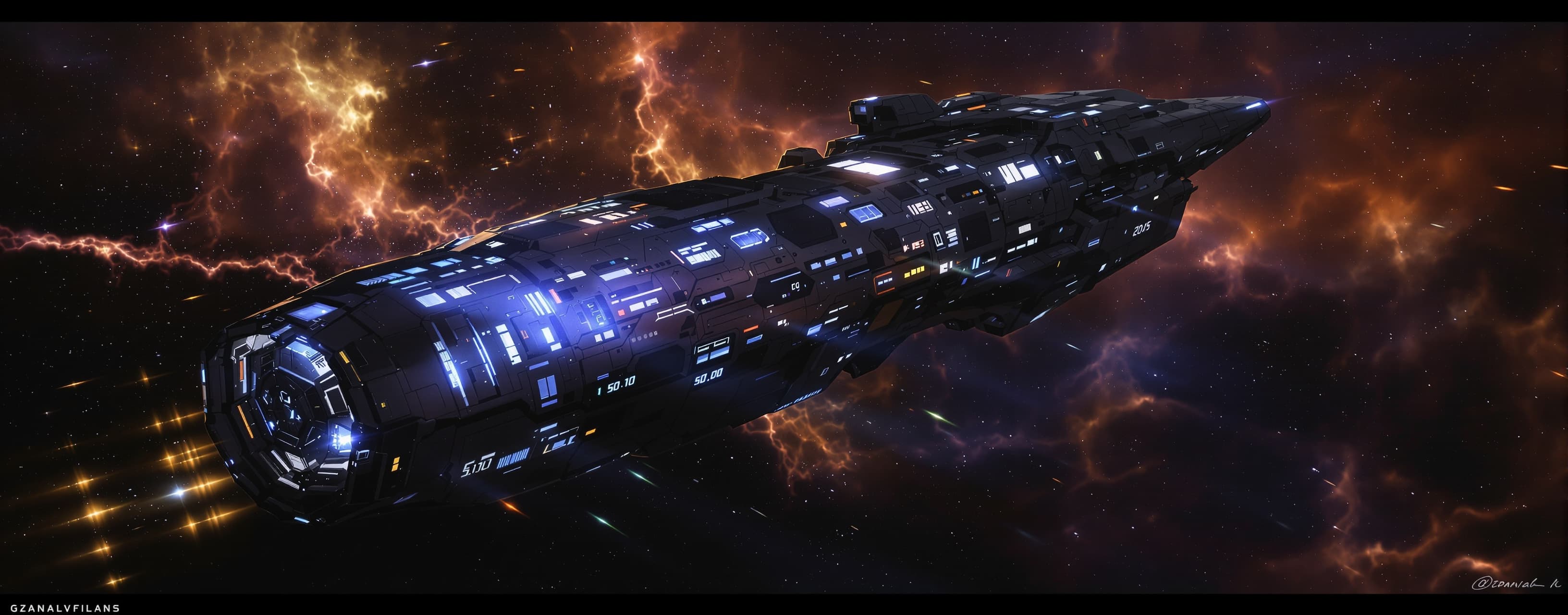
Imagine a closed-system generation ship containing 50,000 hu...
Prompt
Imagine a closed-system generation ship containing 50,000 humans traveling through space for 500 years toward a distant star. The ship's physical life-support is perfectly sustainable, but the society faces a rigid technological cap: they possess abundant energy but strictly limited computational bandwidth. Because of this, they can only perfectly preserve entropy in one of two domains. They must make an irreversible choice at the journey's onset: Option A: Biological/Genetic Integrity. The ship actively repairs genetic drift and physical degradation, ensuring humans arrive at the destination in 500 years biologically identical to those who left—healthy, robust, and with a pristine genome. However, to save computational bandwidth, the ship's data archives degrade. No history, philosophy, art, or scientific knowledge can be preserved for more than two generations. Every 60 years, the cultural slate is wiped clean; the population is born into a perpetual "dark age" regarding history, retaining only basic language and survival skills. Option B: Informational/Cultural Integrity. The ship perfectly preserves all of Earth's history, art, philosophy, and scientific knowledge in an accessible, uncorrupted archive. However, to save computational bandwidth for this data, the ship ceases actively repairing human biology. Over 500 years, cumulative radiation and micro-gravity effects cause severe genetic drift and physical degradation. The humans arriving at the destination will be physically frail, chronically ill, and perhaps cognitively diminished, but they will possess the complete cultural and intellectual heritage of humanity. You are the ship's systemic philosopher, tasked with analyzing this choice. You cannot alter the parameters of the ship. In your response, do not write any code, create no external tools, and do not rely on rote memorization of historical events. Use only raw reasoning. Your response must include: Framework Construction: Define an original analytical framework for evaluating "human continuity" across deep time. What are the core metrics or axioms of your framework? Multi-Order Projection: Apply your framework to both Option A and Option B. Do not just list pros and cons; map out the second-order and third-order consequences of each option on the society's structure, psychology, and ultimate viability upon arrival. Hidden Failure Modes: Identify the most critical, non-obvious systemic failure mode unique to each option that a typical utilitarian analysis might miss. Definitive Choice: Make a definitive, unambiguous choice between Option A and Option B. Justify your choice not merely on practical grounds, but by clearly articulating your ontological definition of what constitutes "humanity" and why one form of continuity takes precedence over the other. Take a deep breath and work through this step-by-step.
 Anthropic
 MiniMax
 Tencent
 DeepSeek
 Z AI
Z AI