High-Level Description Create an experimental interactive 3...
Prompt
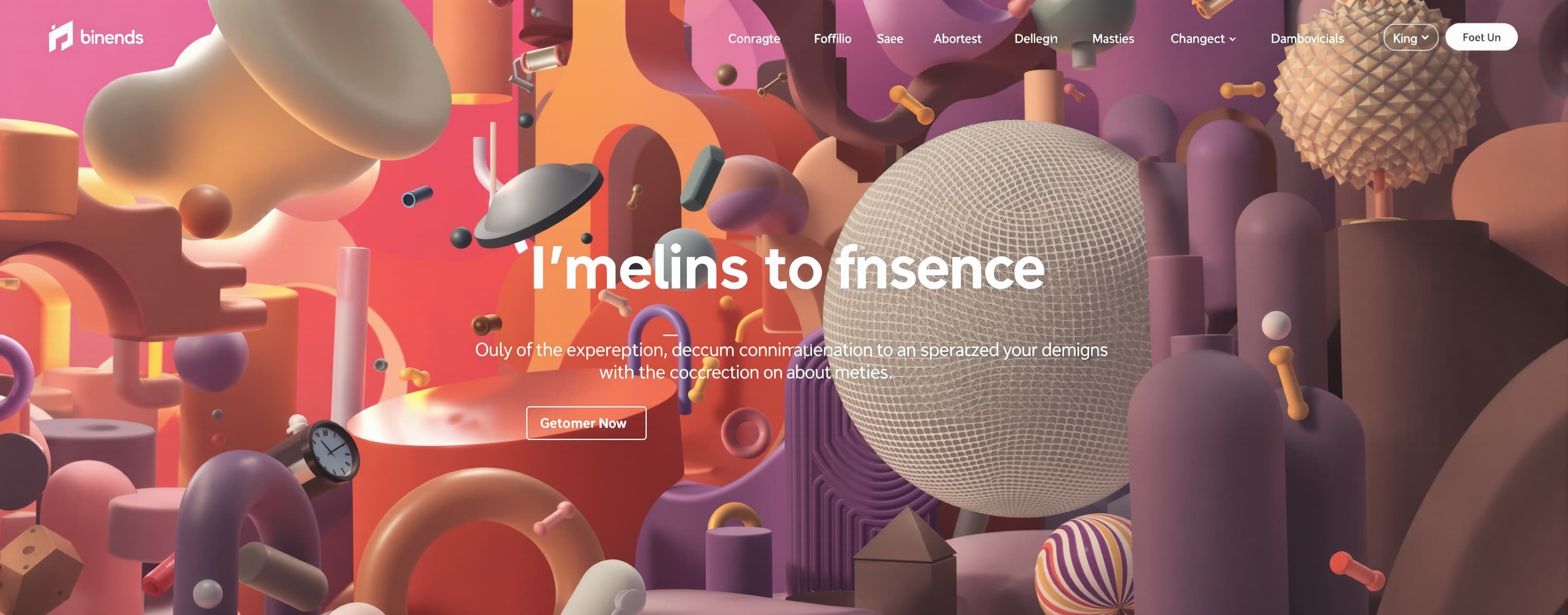
High-Level Description Create an experimental interactive 3D showcase contained entirely within a single HTML file with embedded CSS and JavaScript. This is NOT a portfolio. This is NOT a landing page. This is NOT a traditional website. The experience should resemble a living sculpture, a digital installation, or an interactive art exhibition. There should be almost no text whatsoever. No navigation. No hero section. No paragraphs. No buttons. No UI unless it exists as a physical object within the scene. The entire experience should communicate through shape, motion, lighting, depth, and transformation. Visual References Active Theory. Resn. Bruno Simon. Aatismo. Dogstudio. Obys. Awwwards Site of the Day experiences. Three.js experiments. Beeple. Refik Anadol. Apple Vision Pro demonstrations. The experience should feel like a futuristic museum installation. FIRST RULE THE SCENE MUST BE FILLED WITH OBJECTS. Never leave large empty areas. The world should feel dense and alive. Populate the scene with: * Spheres. * Glass spheres. * Metallic spheres. * Cubes. * Capsules. * Rounded rectangles. * Floating cards. * Rings. * Helixes. * Spirals. * Polyhedrons. * Tori. * Particle clusters. * Crystal structures. * Blobs. * Fractals. * Geometric networks. * Abstract sculptures. * Layered panels. * Light rods. * Orbital systems. Objects should exist across many depth layers. The scene should resemble a floating universe. Geometry Complexity Favor complex structures over isolated primitives. Create: * Orbital systems. * Nested rings. * Recursive patterns. * Intersecting geometries. * Geometric lattices. * Particle swarms. * Connected networks. * Fractal-like structures. * Dynamic clusters. * Multi-layer assemblies. * Symmetrical and asymmetrical compositions. * Mechanical structures. * Floating sculptures. * Impossible forms. * Morphing organisms. Everything should feel handcrafted and highly sophisticated. Cursor Interaction Every object must react to the cursor. Objects should: * Rotate. * Tilt. * Follow the cursor. * Repel from the cursor. * Attract toward the cursor. * Change scale. * Shift depth. * Distort. * Morph. * Cast changing shadows. * Modify lighting. * Change transparency. * Alter material properties. The cursor should influence the entire world. Nothing should remain static. Animation Philosophy Animation is the primary focus. Motion complexity should be extreme. Nothing should simply appear or disappear. Everything should continuously evolve. Objects should: * Split apart. * Merge together. * Fold. * Unfold. * Explode. * Collapse. * Reassemble. * Morph into completely different forms. * Generate new geometry. * Dissolve into particles. * Rebuild themselves. * Transition through many intermediate states. Objects should constantly transform into something else. Advanced Motion Implement: * Spring physics. * Elastic movement. * Inertia. * Momentum. * Motion blur. * Multi-stage timelines. * Parallax systems. * Perspective transformations. * 3D rotations. * Dynamic lighting. * Morph targets. * Vertex deformation. * Procedural animation. * Noise-driven movement. * Particle systems. * Shape interpolation. * Path animations. * Orbital motion. * Collision reactions. * Chain reactions. * Recursive animations. * Wave propagation. * Fluid transitions. Favor complexity and layered motion. Camera System The camera itself should feel alive. Include: * Smooth movement. * Inertia. * Perspective changes. * Dynamic zoom. * Orbital behavior. * Focus shifts. * Cinematic transitions. * Scroll-driven movement. * Mouse-responsive movement. The camera should become part of the choreography. Materials Mix: * Glass. * Frosted glass. * Brushed aluminum. * Chrome. * Polished metal. * Ceramic. * Matte surfaces. * Transparent materials. * Reflective surfaces. * Holographic accents. Use physically realistic lighting and reflections. Lighting Lighting should be cinematic. Include: * Area lights. * Rim lights. * Volumetric effects. * Ambient light diffusion. * Soft shadows. * Dynamic highlights. * Color bleeding. * Bloom. * Reflection probes. * Atmospheric lighting. Lighting should evolve over time. Background The background should remain alive. Include: * Gradient fields. * Noise textures. * Floating particles. * Dynamic fog. * Reactive glow fields. * Morphing meshes. * Volumetric depth. * Environmental movement. The scene should feel infinite. Complexity Rule Whenever possible, choose the more complex option. A single sphere is unacceptable. Create systems of spheres. A single card is unacceptable. Create layered assemblies of cards. A single animation is unacceptable. Create sequences of transformations. A single object is unacceptable. Create ecosystems of objects. Everything should exist as part of a larger system. Final Rule Visitors should immediately think: “How is this even running in a browser?” The experience should resemble an impossible kinetic sculpture suspended in space, constantly evolving through motion, light, and geometry, with almost no text and virtually no conventional interface elements.
A system prompt was added to support web rendering
 Google
 OpenAI
 MiniMax
 Anthropic