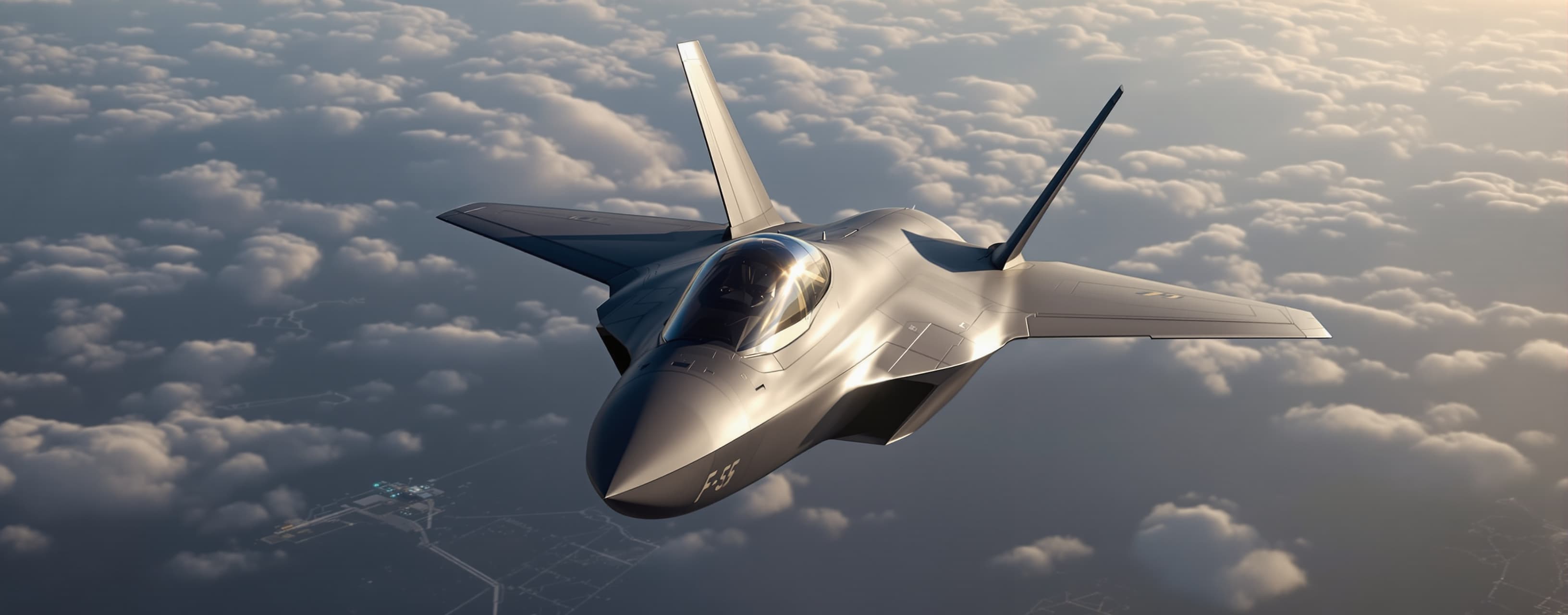
f35 simulation
Prompt
Build a highly realistic, interactive physics-based flight simulation inspired by a modern single-engine stealth fighter aircraft comparable in overall flight characteristics to the F-35 Lightning II. The simulation should focus on realistic aerodynamics, aircraft handling, flight dynamics, cockpit interaction, and environmental physics. ## 1. Aircraft Physics Engine Implement a real-time 6-DOF flight dynamics model including: * Lift, drag, thrust, weight, and gravity * Angle of attack (AoA) * Side slip angle * Dynamic pressure * Air density variation with altitude * Mach number and compressibility effects * Stall behavior * High-angle-of-attack behavior * Ground effect * Wind and turbulence * Crosswind effects * Aircraft inertia and rotational dynamics * Pitch, roll, and yaw * Realistic control surface effects * Landing gear physics * Wheel friction and braking * Runway interaction * Engine thrust response * Fuel weight variation * Center-of-gravity changes * Atmospheric temperature and pressure * Realistic performance degradation at high altitude The physics should be simulation-driven rather than animation-driven. Every aircraft movement must be calculated from the underlying physical model. ## 2. Aircraft Configuration Create a fictionalized modern stealth-fighter aircraft inspired by publicly known characteristics of aircraft such as the F-35, without attempting to reproduce classified or non-public engineering data. Include: * Single-engine configuration * Stealth-oriented aerodynamic shape * Internal weapons bays represented visually but without operational weapons functionality * Retractable landing gear * Advanced flight-control system * Fly-by-wire behavior * Digital flight-control augmentation * High-performance turbofan-inspired propulsion model * Realistic aircraft mass distribution * Realistic control authority * Realistic aerodynamic limitations Do not invent fake classified technical specifications and do not claim that the model is an exact engineering replica. ## 3. Complete Flight Sequence The player should be able to experience the entire flight: ### Cold and Dark * Aircraft initially powered down * Cockpit displays off * Battery and electrical systems * Engine start sequence * Hydraulic and avionics initialization * Flight-control checks ### Taxi * Nose-wheel steering * Differential braking * Engine idle thrust * Taxi speed * Ground friction * Runway markings and airport environment ### Takeoff Create a fully interactive takeoff sequence: * Throttle control * Engine spool-up * Increasing engine thrust * Aircraft acceleration * Nose-wheel steering * Rotation * Liftoff * Landing gear retraction * Initial climb The aircraft should react naturally to incorrect rotation speed, excessive pitch, crosswinds, or insufficient airspeed. ### Climb * Realistic climb performance * Speed and altitude management * Atmospheric effects * Engine performance changes with altitude * Fuel consumption ### Cruise * Stable flight * Autopilot assistance * Manual flight * Trim * Environmental conditions * Realistic fuel consumption ### Maneuvering Allow the player to perform: * Turns * Climbs * Descents * High-G maneuvers * High-angle-of-attack maneuvers * Slow flight * Stall recovery * Energy management Implement realistic G-force effects and pilot limitations without making the simulation unnecessarily difficult. ### Descent and Approach * Controlled descent * Airspeed management * Flaps/control surfaces where applicable * Landing gear deployment * Final approach * Crosswind correction ### Landing Implement: * Flare * Touchdown * Ground effect * Wheel compression * Braking * Aerodynamic deceleration * Runway friction * Taxi after landing ## 4. Cockpit Create a highly detailed fictional modern fighter cockpit with: * HUD * Primary flight display * Navigation display * Airspeed * Altitude * Vertical speed * Heading * Artificial horizon * Mach number * Angle of attack * G-force indicator * Engine parameters * Fuel quantity * Warning systems * Flight-control status * Landing gear indicators Every cockpit instrument should update dynamically based on the physics engine. ## 5. Flight Controls Support: * Keyboard * Mouse * Gamepad * HOTAS joystick * Rudder pedals if available Allow configurable controls. Include: * Throttle * Stick pitch and roll * Rudder * Brakes * Landing gear * Flaps if applicable * Trim * Autopilot * Camera controls ## 6. Weather and Environment Create dynamic environmental conditions: * Clear skies * Clouds * Rain * Fog * Wind * Crosswind * Turbulence * Day/night cycle * Atmospheric visibility * Sunrise and sunset Weather should affect the aircraft physics, visibility, and flight experience. ## 7. Realistic Failure Simulation Include optional non-destructive simulated failures: * Engine performance degradation * Hydraulic system failure * Electrical system failure * Flight-control degradation * Landing gear malfunction * Sensor failure The simulation should teach the player how aircraft behavior changes during failures without providing real-world military operational procedures. ## 8. Visual Quality Use high-quality 3D graphics with: * Physically based rendering * Realistic materials * Detailed cockpit * Dynamic lighting * Atmospheric scattering * Volumetric clouds * Realistic shadows * High-quality terrain * Detailed runway * Realistic aircraft reflections Optimize performance so the simulation can run smoothly on modern PCs. ## 9. Camera System Provide: * First-person cockpit view * HUD view * External third-person view * Chase camera * Free camera * Landing camera * Cinematic camera Camera movement should respond naturally to aircraft acceleration, turbulence, and G-forces. ## 10. Physics Visualization Add an optional developer/debug mode showing: * Lift vector * Drag vector * Thrust vector * Weight vector * Angle of attack * Airspeed * Mach * G-force * Flight path vector * Center of gravity * Center of lift * Control surface positions Display these values in real time. ## 11. Training Mode Create an interactive tutorial that teaches: 1. Aircraft startup 2. Taxiing 3. Takeoff 4. Climbing 5. Level flight 6. Turning 7. Basic maneuvering 8. Stall recognition and recovery 9. Approach 10. Landing Add objectives, scoring, and real-time feedback. ## 12. Technical Requirements Use a modular architecture separating: * Physics engine * Aerodynamics * Propulsion * Flight-control system * Input system * Cockpit instruments * Weather * Terrain * Rendering * Audio * UI The simulation should run at a stable real-time update rate. Prioritize physical consistency over visual shortcuts. If a real aircraft specification is unknown or classified, use a clearly labeled fictional approximation rather than inventing it. ## 13. Development Approach First create a playable prototype with: 1. Aircraft physics 2. Basic cockpit 3. Takeoff 4. Flight 5. Landing 6. Basic environment Then progressively add: * Advanced aerodynamics * Weather * Detailed cockpit * Failure simulation * Training system * Graphics improvements Provide clean, modular, well-documented code and explain the architecture. The final result should feel like a serious professional flight simulator, with the aircraft behavior driven by physics rather than scripted animations.
A system prompt was added to support web rendering
 Anthropic
 Kimi
Kimi